
City Guide
Bloomington, United States
How to plug into Bloomington’s residencies, university resources, and quieter woods-and-campus art life.
Why artists actually choose Bloomington
Bloomington is one of those mid-sized cities that quietly does a lot for artists. The university presence is massive, the woods are real, and the arts ecosystem is denser than you’d expect for a place of this size.
If you’re residency-hopping or planning a focused project, Bloomington is especially attractive if you:
- Want access to research collections, archives, and labs
- Like a compact, walkable core instead of a sprawling metro
- Prefer a slower pace than big-coast cities but still need stimulating programming
- Value both quiet woodland retreats and community-engaged work
The big cultural engine here is Indiana University Bloomington (IUB). If you’re on a residency tied to IU, you’re basically plugging into:
- The Eskenazi School of Art, Architecture + Design
- Grunwald Gallery exhibitions and visiting artists
- The Gayle Karch Cook Center for Public Arts and Humanities
- The Lilly Library (manuscripts, rare books, visual material)
- Other research centers, archives, and campus-wide lecture series
Off campus, you get a mix of nonprofit spaces, artist-led projects, and music/venue culture, all surrounded by rolling green hills and woods. That combination is exactly what many residencies here are built around: access plus quiet.
The Hundredth Hill Writer and Musician Retreat
Vibe: Wooded retreat, small-scale, self-directed, very good for people who need to disappear and work.
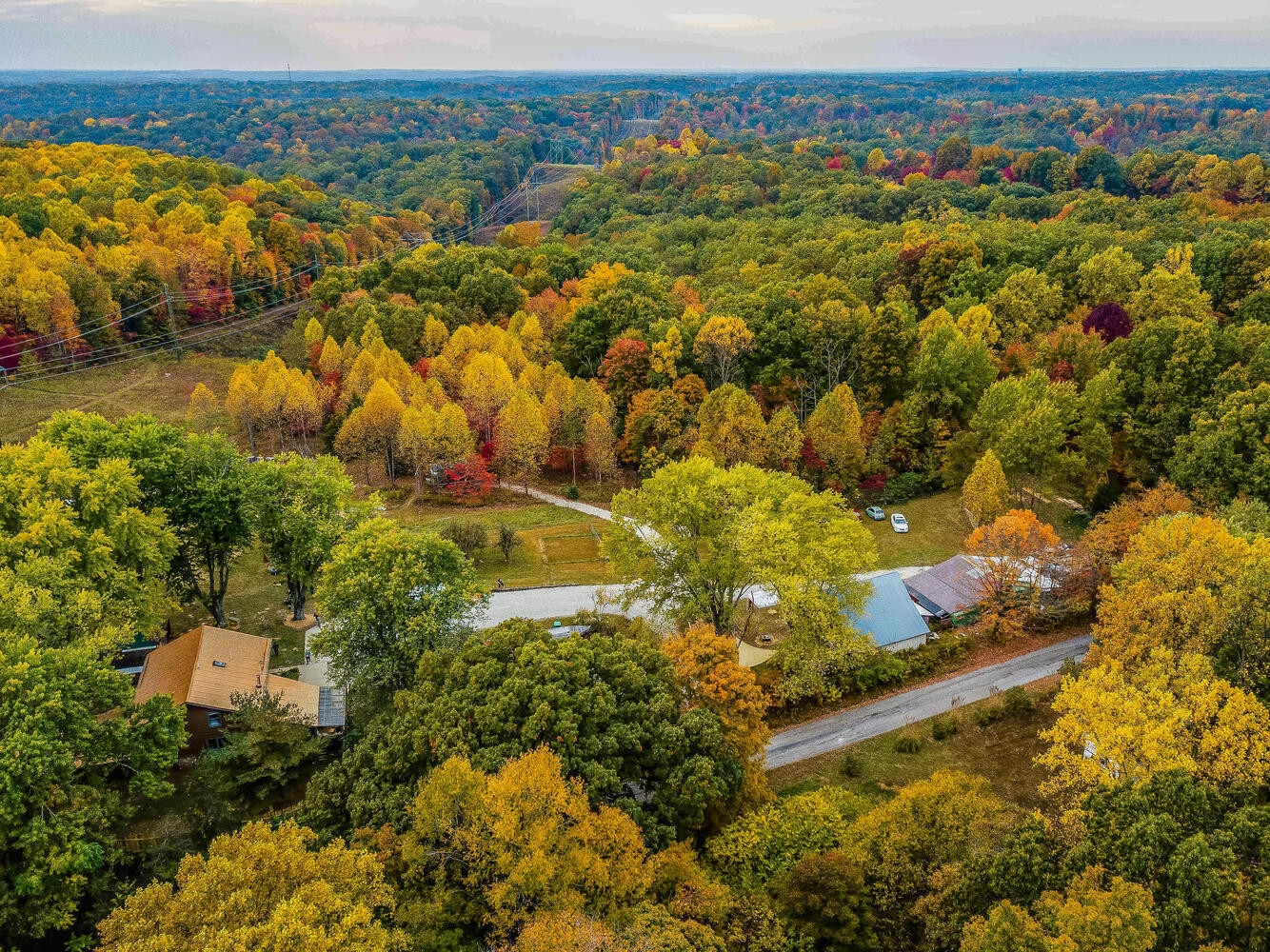
Location & setting: The Hundredth Hill is just outside Bloomington on about 50 acres of Indiana woodland. You get rolling green hills, trails, and enough space that you can actually reset your nervous system between sessions in the studio or at the desk.
Residency format:
- Week- and month-long retreats
- Four original, upcycled, finely crafted residences
- Artists can apply as individuals or as a 4-person team
- Self-directed: no heavy programming schedule, you manage your own time
Facilities & daily life:
- Each unit has a kitchenette (refrigerator, sink, microwave, induction cooktop, air fryer, panini grill, coffee maker)
- Retreats include a fully stocked pantry and fridge in each residence with basics for cooking
- Coffee, tea, and spices provided
- Access to laundry facilities
- On-site recording studio, workshop spaces, and performance stages
You cook for yourself, so it suits artists who don’t mind being self-sufficient. You’re not in a city-center live/work loft; you’re in the woods with a fridge, a studio, and time.
Who this really suits:
- Writers working on manuscripts, scripts, or long-form projects
- Musicians or bands needing recording and arranging time away from touring routines
- Small collaborative teams (up to four) who want to live and work together
- Artists who want to be near, but not inside, a campus/art city ecosystem
Strengths for your practice:
- Long, uninterrupted work blocks in a quiet natural setting
- On-site recording infrastructure plus performance spaces
- Enough kitchen and pantry support that you don’t lose time scrambling for food
- A retreat that understands artists as working adults, not campers
Potential challenges:
- You’re outside town, so a car is very useful if you plan to go into Bloomington often
- No catered meals: if you hate cooking, factor that into your planning
- Programming is minimal by design, so if you need constant feedback, this may feel too quiet
Practical tip: Treat this like a writing or recording sprint. Bring a tight project brief, reference materials, and any hard-to-source equipment. The more prepared you are, the more you can use the solitude.
You can read more or inquire directly at The Hundredth Hill.
IU Engaged Artist-in-Residence (Gayle Karch Cook Center)
Vibe: Public-facing, socially engaged residency with deep access to campus and community, not a hermit-in-the-woods situation.
Host: The Gayle Karch Cook Center for Public Arts and Humanities at Indiana University brings in two working artists per year as Engaged Artists-in-Residence.
Program focus:
- Residencies are built around workshops, outreach projects, and exhibitions
- Artists interact with students and community members, on and off campus
- Designed to support engaged artistic practice using IU’s resources (curation, collections, research)
- Encourages new modes of artistic exchange that speak to Bloomington’s largely rural, Midwestern context
Typically, the program structures its seasons so that:
- Fall residencies highlight artists working in the Midwest
- Spring residencies connect to artists with ties to IU’s Global Remixed programming
What you actually do:
- Develop a community-engaged project or body of work
- Run or participate in workshops, talks, outreach programs
- Show work in an exhibition context (often with the Cook Center and/or IU partners)
- Collaborate with faculty, students, and local organizations
Who this really suits:
- Artists whose practice already includes education, facilitation, or community collaboration
- Interdisciplinary artists who want archives, libraries, and research collections
- Artists interested in public humanities, social histories, or regional narratives
- Mid-career artists who want to articulate and test new models of public practice
How it changes your work:
- You test how your practice functions in a Midwestern college town with a strong civic arts framework
- You get used to working across academic, municipal, and community layers
- You build a project that has an audience during development, not just at the end
Practical tip: Apply with a project that is structured but flexible. The program values artists who can respond to local context, not just drop in with a pre-written script.
For current details, look at the Engaged Artist-in-Residence page on the IU Arts and Humanities Council site: Engaged Artist-in-Residence program.
McKinney International Art and Design Residency (Eskenazi School)
Vibe: Short, focused residency for established international artists or designers who want serious time with a U.S. art school, plus a solid fellowship.
Host: The Eskenazi School of Art, Architecture + Design at Indiana University Bloomington.
Basic structure:
- 4–6-week residency
- An $8,000 USD fellowship (amount as described in current calls; always confirm)
- Resident is featured in the McKinney Visiting Artist Lecture Series
- Includes studio visits, open studios, and at least one workshop focused on technical or conceptual aspects of your practice
Eligibility and profile:
- Your primary country of residence must be outside the United States
- You should be an established artist or designer with a track record
- The application asks for evidence of a national and international exhibition record
- Open to a range of disciplines: craft/traditional arts, photography, drawing, film/video/new media, mixed media, painting, sculpture, and more
What you can expect access to:
- Eskenazi School studios, labs, and fabrication spaces (according to your discipline)
- University resources: collections, research centers, archives, libraries
- A community of students and faculty who are used to hosting visiting artists
The resident is chosen based on:
- The strength of their professional career
- Evidence that they are committed to being part of an academic environment
- A proposal that uses IU’s facilities and collections in a meaningful way
Who this really suits:
- International artists ready to engage with students and faculty, not just use a studio
- Artists who can use archives, special collections, or technical labs to push a project forward
- People comfortable speaking, critiquing, and presenting their work publicly
Visa and logistics:
- The residency is specifically built for international artists, so you should request clear guidance on visa category, invitation letters, and payment structure
- Start conversations about timing and paperwork early; your country’s visa processing time can be the longest part of the process
For current calls, check the Eskenazi School announcements or dedicated McKinney Residency pages. One entry point is here: Eskenazi School of Art, Architecture + Design.
Other residency-style options near Bloomington
If you’re exploring the area more broadly, there are other retreat-like setups in this part of Indiana. One example is Airtime Recording Studios, which offers:
- About 38+ acres of woodland trails
- Three guest studio residences (including an Airstream)
- Year-round capacity for small groups, with more in warmer months
- Self-sufficient residences with kitchenettes and full baths
It’s not Bloomington-city-core, but it’s part of the broader regional ecosystem. If you’re building a longer Midwest working trip, mixing Airtime, The Hundredth Hill, and IU-connected opportunities can give you very different contexts for one larger body of work.
You can read more at Airtime Studios artist residences.
Neighborhoods, cost of living, and where artists tend to land
Cost overview: Bloomington is generally cheaper than coastal art centers but not rock-bottom cheap, especially near the university. Rents near campus and downtown can feel high by small-city Midwest standards because of student demand.
Areas to look at:
- Downtown Bloomington – Walkable to galleries, venues, cafes, and many campus spaces; high convenience, higher competition.
- Near Northside / Old Northeast – Close to downtown, often walkable or bikeable, mixed rental options.
- Near West Side / Prospect Hill – Historic houses, neighborhood feel, quick access to downtown, sometimes better deals.
- Elm Heights – Residential and leafy, convenient to IU, popular with faculty and grad students.
- B-Line Trail corridor – Great if you rely on biking; connects you to downtown and other key nodes.
- Southside / light industrial edges – Often where you find slightly larger spaces and potential live/work setups.
How artists make it work:
- Short residencies often pair on-campus housing or retreat lodging with bike or bus use
- Longer stays sometimes use sublets timed to the academic calendar (summer or semester-based openings)
- If you need large studio space, it’s usually easier just outside the core or in mixed-use/industrial pockets
Studios, galleries, and where to show work
Studio options: Dedicated artist buildings come and go, so think of Bloomington’s studio scene as a mix of:
- IU studios tied to Eskenazi and other departments (mostly for enrolled students and formal residencies)
- Artist-run or nonprofit spaces that carve out workspaces and project spaces
- Live/work setups in houses or small commercial buildings
- Regional options in nearby cities, highlighted on the City of Bloomington arts resources pages
The city often shares broader Indiana opportunities, such as:
- Professional exhibition calls through Indianapolis Art Center
- Studio rentals at Wapahani Art Center in Indianapolis and other regional listings
Those examples sit outside Bloomington, but they show how local artists regularly move between Bloomington and Indianapolis or other nearby hubs.
Exhibition and presentation venues:
- Grunwald Gallery – IU’s primary contemporary gallery, often featuring faculty, visiting artists, and curated shows.
- Gayle Karch Cook Center – Exhibitions and public programs with a humanities angle and community focus.
- Other IU venues connected to Eskenazi and campus centers that host visiting artist projects.
- Pillar Arts Gallery Space at Simon Mall – Used in partnership with projects like The Hundredth Hill’s youth programs; an example of how nontraditional spaces get activated.
- Smaller downtown galleries, pop-up spaces, and project rooms that shift over time but are easy to discover once you’re on the ground.
How residencies plug into this:
- Engaged Artist-in-Residence projects often culminate in exhibitions or public events anchored at Cook Center or partner venues.
- McKinney residents are integrated into lecture series, workshops, and often a public presentation or show.
- The Hundredth Hill sometimes interfaces with local galleries, like youth exhibits at the Pillar Arts Gallery Space, hinting at how even rural retreats connect back to town.
Transportation and getting around during a residency
In town:
- Walking and biking are realistic in and around downtown and campus.
- The B-Line Trail is your main car-free artery, useful if you’re staying near it.
- There is public transit, but many artists still rely on bikes or cars for flexibility.
Regional access:
- Bloomington is around 50 miles southwest of Indianapolis.
- Indianapolis gives you access to a major airport and a bigger gallery and residency network.
- Some artists combine a Bloomington residency with shows or visits in Indy on the same trip.
Residency-specific considerations:
- The Hundredth Hill – Strongly consider having a car. Rideshares may be limited at night, and grocery runs are easier with your own vehicle.
- IU-based residencies – If you’re housed near campus, a bike plus occasional rideshares can be enough.
Visas and paperwork for international artists
If you’re coming from outside the U.S., expect to budget time and bandwidth for documentation, especially for the McKinney International Art and Design Residency.
What to clarify with the host:
- What visa type they expect you to use (often a J-1, but it depends on the program and your role)
- Whether they provide a formal invitation letter and support documents
- How the fellowship or stipend is paid and whether that affects visa or tax status
- Expected dates of stay and any built-in flexibility
Planning tips:
- Start conversations with the residency as soon as you’re shortlisted.
- Check your local consulate’s processing times and back-calculate your application timeline.
- Keep copies of housing confirmations, insurance details, and letters in both digital and print form for travel.
When to be in Bloomington
Fall: Probably the richest season for visiting artists. Campus is in full swing, shows and lectures are constant, and the woods are serious about autumn.
Spring: Lively again, with better weather for biking and outdoor work-in-progress documentation.
Summer: Quieter, which can be ideal if you want deep studio time. Some campus programming slows, but you get emptier bike paths, easier access to nature, and fewer schedule clashes.
For applications: Many academic residencies, including McKinney, set deadlines well in advance of the residency period. Expect to be planning 6–12 months ahead, especially if you need a visa or are aiming for competitive funding.
Which Bloomington residency is right for you?
Quick way to match your practice to the right structure:
- You want solitude, nature, and self-directed time – Look to The Hundredth Hill Writer and Musician Retreat. Bring a clear project and plan to cook for yourself.
- You build work around people, workshops, and public dialogue – The Engaged Artist-in-Residence at the Cook Center is your angle, especially if you’re interested in public humanities or socially engaged practice.
- You are an established international visual artist or designer ready for short, intense academic immersion – The McKinney International Art and Design Residency offers a fellowship and serious institutional access.
Bloomington is especially strong when you treat it as both a studio environment and a research/community collaborator. You can write in the woods, lecture in a university hall, test a participatory workshop downtown, and then spend an afternoon in an archive, all in the same residency arc.
If you line up your project with that mix — nature, research, community — Bloomington pays off quickly.
Residencies in Bloomington

Indiana University Eskenazi School of Art, Architecture + Design
Bloomington, United States
The McKinney International Art and Design Residency at Indiana University Eskenazi School of Art, Architecture + Design in Bloomington offers established international artists and designers a 4-6 week stay to develop their practice using university facilities, collections, and research centers. Residents participate in the McKinney Visiting Artist Lecture Series, studio visits, open studios, and a workshop while receiving studio space, lodging, an $8,000 fellowship, health insurance, and up to $500 in supplies. Applications are open to contemporary studio practitioners and critics from outside the US, with the next cycle for .

McKinney International Art and Design Residency
Bloomington, United States
The McKinney International Art and Design Residency, hosted by the Eskenazi School of Art, Architecture + Design at Indiana University Bloomington, offers international artists and designers a 4–6-week stay to develop their practice using university facilities, collections, and research centers. Selected residents participate in the McKinney Visiting Artist Lecture Series, studio visits, open studios, and a workshop, with studio space, lodging, an $8,000 USD fellowship, health insurance, and up to $500 in supplies provided.
The Hundredth Hill Writer and Musician Retreat
Bloomington, United States
The Hundredth Hill offers week- and month-long retreats for writers and musicians on 50 acres of Indiana woodlands near Bloomington, IN. Features upcycled residences, recording studio, performance spaces, and kitchens. Founded by musician Krista Detor and engineer David Weber.
Explore United States
More city guides
Opportunity Intelligence
Ready to find your next residency?
Get a personalized shortlist — scored against your practice, discipline, and what you need right now.
See how Intelligence works →