City Guide
Bern, Switzerland
How to use Bern’s tight-knit art scene, residencies, and neighborhoods to actually get work done.
Why Bern works so well for residencies
Bern is one of those cities that quietly works in your favor as an artist. It’s compact, walkable, and packed with institutions and project spaces, but it never feels like a high-pressure art market. You can actually see people more than once, follow up on conversations, and build relationships in a matter of weeks.
For residency time, that balance matters. You get:
- A serious mid-sized scene with museums, artist-run spaces, galleries, and studios.
- Fast access to community because the city is small enough that artists genuinely run into each other.
- Institutional density in a tight radius, so you can spend your days working and your evenings at openings or talks without long commutes.
- A lower-key atmosphere than Zurich or Basel, which often suits deep-focus work, research, and experimentation.
Bern’s profile leans toward:
- Contemporary visual art
- Performance and live art
- Interdisciplinary and research-based practice
- Music, sound, and cross-media work
- Socially engaged, curatorial, and text-based practices
Residencies here are usually less about chasing collectors and more about production, exchange, and building long-term networks in Switzerland.
Key residencies and residency pathways in Bern
Bern doesn’t have hundreds of residencies, but the ones it has are well integrated into the city. A lot of visiting artists end up connected to the same hubs, which actually makes networking easier.
PROGR – Zentrum für Kulturproduktion
Location: Central Bern, right by the old town
Type: Studio complex, cultural center, and residency host
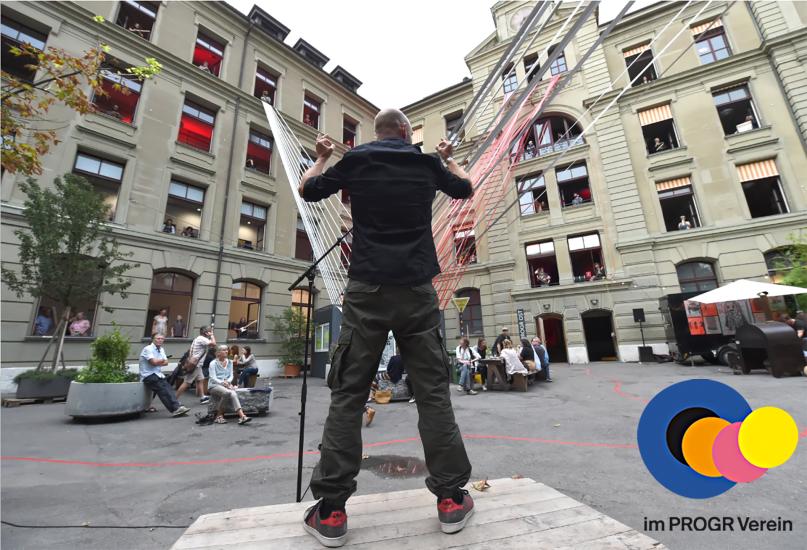
PROGR is the main anchor for artists in Bern. Housed in a roughly 4,500 m², five-story former school building, it brings together artist studios, cultural workers, exhibition spaces, and a café/bar under one roof. If you are in residence here, you’re not tucked away, you’re right in the middle of things.
What you can expect from a residency at PROGR:
- An apartment on the top floor reserved for artists-in-residence.
- Direct contact with a dense community of artists, curators, and cultural workers based in the building.
- On-site galleries, a café, bar, and event spaces that host exhibitions, concerts, talks, and performances.
- Regular chances to meet local practitioners informally at openings, lunches, and corridor conversations.
The residency program at PROGR is known for prioritizing connection to the local scene. Visiting artists often end up with invitations to exhibit, perform, or collaborate—sometimes during their stay, sometimes later once relationships have developed.
Who PROGR suits best:
- Visual artists needing shared energy and public exposure.
- Performance or sound artists interested in live events and informal try-outs.
- Interdisciplinary practitioners who benefit from being around writers, musicians, designers, and curators.
- Artists who like a public-facing residency rather than a secluded retreat.
Residencies at PROGR are often allocated via larger programs such as Pro Helvetia and sometimes appear on platforms like Residency.ch or through PROGR’s own channels. Conditions can vary, so always check whether housing, stipends, and production budgets are covered.
Pro Helvetia residencies hosted in Bern
Organizer: Pro Helvetia – Swiss Arts Council
Main Bern host: PROGR
Pro Helvetia runs a national and international residency program that includes placements in Bern. For Bern-specific artists, the relevant configuration is usually Pro Helvetia-supported residencies at PROGR.
What Pro Helvetia residencies typically offer:
- Up to three months in a new context.
- Time and space for research, reflection, and development of new work.
- Support for artistic exchange, including introductions and local contacts.
- Depending on the host, options for open studios, presentations, or exhibitions.
Who can apply:
- Artists and cultural practitioners based in Switzerland working in disciplines supported by Pro Helvetia.
- Artists and cultural practitioners from countries covered by Pro Helvetia’s liaison offices who want to come to Switzerland.
- Both individuals and artist duos are typically eligible.
Pro Helvetia is a strong fit if you want a residency with institutional backing, clear selection criteria, and international context. The application involves a centralized process, so your proposal needs to fit both the discipline guidelines and the residency’s spirit of exchange.
To get accurate eligibility details and current conditions, go straight to Pro Helvetia’s residency page: prohelvetia.ch – Residencies.
here i am @ PROZESS, Bern (artlink)
Organizer: artlink
Focus: Artists and cultural practitioners with refugee or migration experience who recently moved to Switzerland
Here! Am at PROZESS in Bern is a residency track designed specifically to support artists who have recently arrived in Switzerland with refugee or migration backgrounds. It aims to build sustainable artistic careers, not just offer a short break.
Typical support includes:
- Accommodation in one of several bright, renovated studios combining living and working space.
- A small kitchen, bedroom with double bed, and private bathroom within each unit.
- Per diems to cover daily living costs.
- Travel expenses within Switzerland, so you can attend meetings, events, or showings beyond Bern.
- Networking and mentoring support to build long-term partnerships.
Who it’s for:
- Artists and cultural workers with refugee experience.
- Artists with broader migration backgrounds who recently relocated to Switzerland.
- Practitioners who want to connect their work to Swiss institutions, communities, and potential collaborators.
Here! Am is especially valuable if you are just starting to orient yourself in Switzerland and need both time to work and structured support to enter the local and national scene.
You can find more about artlink’s projects and calls at artlink.ch. Look for current information under projects like “Here! Am”.
Other Bern-linked opportunities
Beyond these flagship setups, Bern artists often plug into forms of support that are not branded as classic “residencies” but work in a similar way:
- Short-term project spaces where you get keys to a space for a defined period.
- Studio swaps with local artists who are themselves away on residency.
- Regional programs in the broader Bern region or along the Zurich–Bern corridor, such as artist residencies in nearby towns that still use Bern as a cultural reference point.
It’s worth keeping an eye on:
- Reviewed by Artists – Switzerland list for an overview of Swiss residencies with filters by city, stipend, and housing.
- Residency.ch for Swiss programs, including placements in Bern and Pro Helvetia-supported options.
- Announcements directly from PROGR and artlink.
How to live and work in Bern as a resident artist
A good residency is never just about a nice studio. Bern’s city structure, cost of living, and neighborhoods all shape how your time plays out.
Cost of living and budgeting
Bern is expensive compared to many cities, although usually a little less intense than Zurich for rent. The main budget points are:
- Housing: High, especially for short-term stays and central apartments. Any residency that includes accommodation removes a huge financial headache.
- Food: Supermarkets are your friend; eating out adds up quickly. Many artists cook at home and treat café/bar visits as targeted networking time.
- Studio space: Hard to find affordably on the open market, which is why residency studios and shared workspaces at places like PROGR are valuable.
- Public transport: Excellent but not cheap. A monthly pass or multi-trip tickets help manage costs if you’re moving around a lot.
- Daily expenses: Materials, printing, and basic living costs are all on the higher side, so build that into your project budget.
To get a sense of how Swiss residencies support artists, look at examples such as Villa Sonnenberg near the Zurich–Bern corridor, which offers modest daily per diems plus housing and studio. Many programs in Switzerland follow a similar structure: accommodation and workspace covered, with stipends that help but rarely replace a full-time income.
Neighborhoods artists actually use
You’ll probably orient yourself around where you live and where your studio sits. For PROGR-based residencies, you are already in central Bern, which simplifies things. For other setups or self-organized stays, these areas often come up:
- Old Town / Innenstadt
Historic, postcard-perfect, and extremely central. Walking distance to major museums, PROGR, galleries, and the main station. Great for networking and everyday access, but apartments can be expensive and limited. - Länggasse-Felsenau
Close to the University of Bern, with a mix of students, academics, and creatives. Residential but lively. A good base if you want everyday life plus easy tram or walking access to the center. - Lorraine
Often described as one of the more creative-feeling areas. Cafés, independent spaces, and a neighborhood atmosphere that suits artists and freelancers. A nice compromise between “local” and “connected”. - Breitenrain
Community-oriented, with plenty of everyday infrastructure, bars, and cafés. A solid choice if you prefer a local neighborhood where people know each other. - Wabern and outskirts near the Aare
Quieter, greener, and a bit removed. Good if you want nature and calm, and don’t mind taking trams or trains into the center.
If a residency gives you a studio but not housing, prioritize proximity to tram and bus lines. Bern’s scale is forgiving, but commuting from too far out can cut into your working time and evening events.
Studios and workspaces
In Bern, professional studio space is precious. You’ll see a mix of:
- Long-term artist studios in complexes such as PROGR.
- Shared studios with flexible partitions and mixed disciplines.
- Short-term project spaces where you temporarily install your work.
- Institutional studios attached to museums or education facilities.
If you’re coming for a residency, the easiest path is to use the on-site studio or workspace. If you’re self-funding a stay, reach out early to artists and spaces in Bern; there are occasional sublets and short-term desk or studio shares, but they vanish quickly.
Using Bern’s art ecosystem while you’re in residence
Residency time passes fast. Having a sense of the city’s infrastructure helps you plug in quickly and avoid spending the first month just figuring out where to go.
Museums and major institutions
Bern’s public institutions give you both inspiration and a way to gauge how your work might sit in a Swiss context:
- Kunstmuseum Bern
The main art museum, with a collection that stretches from historical works to contemporary exhibitions. Good for understanding local and national art histories and how current exhibitions are framed. - Zentrum Paul Klee
A striking building dedicated to Paul Klee, with exhibitions that often link his work to contemporary practices and themes. Worth visiting both for content and architecture. - PROGR
Not a museum, but a central cultural production center. Exhibitions, project spaces, and a constant stream of events make it one of the easiest places to meet the city’s active artists. - Museum of Communication
More thematic than art-specific, but relevant if your practice touches media, society, or technology. Their exhibition design can be interesting for installation artists and designers.
These institutions often host talks, screenings, and public programs that can be as useful as the exhibitions themselves. Keep an eye on event calendars once you arrive.
Independent and artist-run spaces
Bern’s independent scene is compact but influential. Project spaces, off-spaces, and temporary venues often operate on small budgets and strong community energy. You might encounter:
- Pop-up exhibitions in unconventional spaces.
- Artist-run galleries with short, experimental shows.
- Performance nights, readings, and informal concerts.
- Open studio events clustered around studio houses.
The easiest way to find these is not through giant listings, but by:
- Checking flyers and posters in PROGR, cafés, and art schools.
- Talking to fellow studio holders and asking what’s active right now.
- Following local spaces and artists on social media once you have a few names.
Transportation and regional access
Bern is very manageable spatially, which is a big plus during a busy residency.
- Inside the city: Trams and buses are reliable, and central areas are easily walkable. Cycling is common, especially in the flatter parts of town.
- To other Swiss cities: Trains from Bern reach Zurich, Basel, Lausanne, and Geneva quickly, making day trips to openings and institutions realistic. Thun and the Alps are close if you need a change of scenery or landscape research.
If your residency includes a Swiss travel contribution, use it to visit partners, shows, and spaces in other cities. Swiss art networks are national rather than hyper-local, and connections made in Zurich, Basel, or Lausanne often loop back to Bern later.
Visas, timing, and choosing the right Bern residency
Visa and residency basics
Exact requirements depend on your passport, funding, and length of stay, but a few patterns are consistent across Swiss residencies:
- EU/EFTA artists: Short, unpaid or modestly funded stays are usually straightforward, but anything longer or more formal can involve registration with local authorities.
- Non-EU/EFTA artists: You may need a visa or residence permit; the details change based on duration and whether you’re receiving a stipend or fee.
- Residency hosts: Many programs support you with paperwork or official invitation letters, especially larger ones like Pro Helvetia placements.
Always check three sources before you commit: the residency itself, the Swiss consulate or embassy in your country, and the relevant cantonal authority if your stay is extended.
When to be in Bern
Bern works in different ways depending on the season, so it helps to match your residency to your working style:
- Spring: Openings, events, and a general sense of restart. Good if you want to meet people and test work publicly.
- Summer: Outdoor social life and long days. Some institutions slow down, but the city feels open and relaxed.
- Autumn: Strong exhibition season and lots of programming. A good time for visible projects and networking.
- Winter: Quieter and more introspective. Perfect if your priority is deep focus in the studio and you’re disciplined about scheduling your own social contact.
Is Bern the right residency city for you?
Bern tends to suit artists who:
- Want concentrated time to work without complete isolation.
- Care about local exchange and community, not just a room and a key.
- Work in visual art, performance, sound, or interdisciplinary practice that benefits from informal showings and conversations.
- Are eligible for Pro Helvetia or other structured programs and want that backing.
- Are recent arrivals to Switzerland with migration or refugee experience who would benefit from targeted support such as Here! Am @ PROZESS.
It is less ideal if your main goal is to interact with a huge commercial gallery scene or a fast-moving collector base. Bern is more about sustained relationships, peer conversation, and high-quality working conditions than it is about aggressive sales.
Names to keep on your list
If you’re building a residency plan around Bern, keep these in your notes:
- PROGR – Zentrum für Kulturproduktion – Central hub, studios, and residency host.
- Pro Helvetia residencies at PROGR – Structured three-month exchanges with institutional support.
- Here! Am @ PROZESS, Bern (artlink) – Residency specifically for artists with refugee or migration experience.
- Reviewed by Artists – Switzerland – For comparing residencies by housing, stipend, and city.
- Residency.ch – For current calls and Swiss-wide opportunities that touch Bern.
If you start with those, talk to artists already based in Bern, and build in time for museum visits and local openings, you’ll get much more than just a few quiet weeks in a studio. You’ll leave with contacts, references, and a realistic sense of how your practice can live within Switzerland’s broader art ecosystem.