City Guide
Bern, Switzerland
How to use Bern’s close-knit art scene, residencies, and infrastructure to really work while you’re there
Why Bern Works Well as a Residency City
Bern looks like a postcard capital but behaves like a small, connected art town. That combination is exactly why residencies here can be productive: you get serious institutions, but the community is compact enough that people actually remember you.
The city is walkable, public transport is easy, and you’re one direct train away from Zurich, Basel, Lausanne, or Geneva. You can spend weekdays working in Bern and still make it to openings or meetings in other cities without burning all your time or budget.
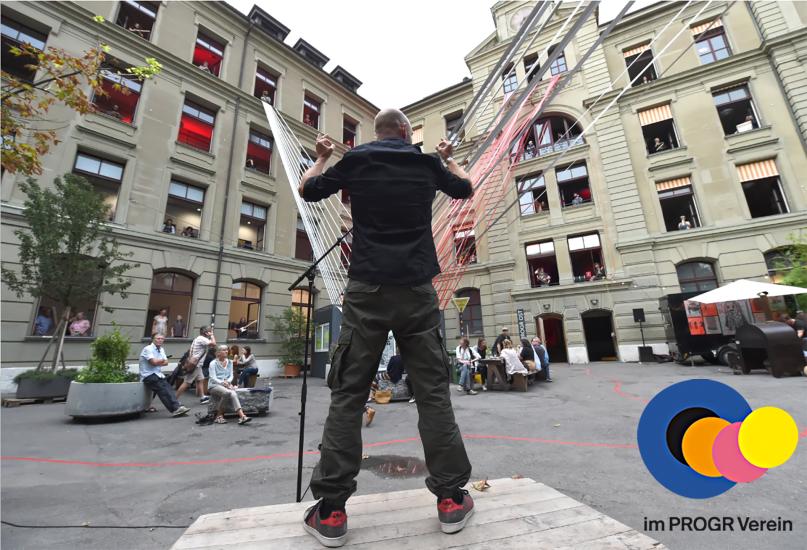
On the ground, you’ll find a mix of large museums, mid-scale institutions, and artist-run spaces. A lot of the energy is anchored by PROGR, a former school building turned arts center right in the city center, which also hosts one of the main residency programs in Bern.
In short, if you want a residency that balances focus with access, Bern is a solid choice: enough happening to keep you connected, calm enough that you can actually make work.
The Key Residencies in and Around Bern
Bern doesn’t have hundreds of programs, but the ones it does have are quite targeted. Here’s what to know about the main options and who they suit.
PROGR Residency Program
Where: PROGR, Speichergasse 4, central Bern
Type: Urban, network-focused residency
Good for: Visual and interdisciplinary artists wanting deep local contact and public visibility
PROGR is a 4,500 m², five-story former school complex that now functions as a cultural hub. Inside you’ll find:
- Dozens of artist studios and workspaces
- Galleries and project rooms
- A café and bar where people actually hang out
- Spaces for concerts, events, and public programs
- An apartment on the top floor used to host visiting artists
The residency at PROGR is intentionally social. The team prioritizes connecting visiting artists with the local scene: curators, fellow artists in the building, and the wider Bern community. Past residents have ended up with exhibitions, performances, or other invitations as a direct result of those connections.
What you can expect to do there:
- Develop a project in dialogue with local artists and curators
- Host an open studio, talk, or performance
- Meet people over lunch or coffee inside the building (a lot happens informally)
- Use Bern as a base while visiting other Swiss cities for research or meetings
Who it suits best:
- Artists who want to be embedded in a live ecosystem rather than isolated in a village
- People who enjoy sharing a corridor or courtyard with other artists, musicians, and cultural workers
- Artists who are open to public events and studio visits, not just quiet research
How access usually works: Pro Helvetia supports one or two residencies per year at PROGR, often selected via Residency.ch or partner programs. The simplest way to get a current picture is:
- Check PROGR’s site: https://www.progr.ch
- Check Pro Helvetia’s residency page for mention of Bern/PROGR: Pro Helvetia residencies
- Search for “PROGR” on Reviewed by Artists to see how artists describe it: Reviewed by Artists
Pro Helvetia Residency Options Touching Bern
Where: Bern via PROGR, plus other Swiss and international locations
Type: Three-month funded exchanges
Good for: Artists who fit Pro Helvetia’s country and discipline criteria and want a structured, funded stay
Pro Helvetia runs a larger residency scheme that connects Switzerland with regions where it has liaison offices. The framework is simple:
- Artists based in Switzerland can apply to spend up to three months in a region where Pro Helvetia has a liaison office.
- Artists based in those regions can apply to spend up to three months in Switzerland.
Bern enters the picture because PROGR is one of the sites Pro Helvetia backs. If you’re eligible, this can mean:
- Funding support (travel and per diem-style contributions)
- A structured timeframe of around three months
- A residency frame that is recognized across Swiss institutions
How to approach it strategically:
- Check if your country is listed under Pro Helvetia’s liaison regions.
- If yes, look for open calls mentioning Switzerland or Bern.
- Tailor your proposal to emphasize exchange, research, and collaboration rather than only production.
Pro Helvetia’s overview and application details are here: https://prohelvetia.ch/en/our-funding-areas/residencies/
artlink / HERE I AM at PROZESS, Bern
Where: PROZESS, Bern
Organizer: artlink
Type: Residency for artists with refugee or migration experience
Good for: Artists who recently relocated to Switzerland and need both space and institutional support
HERE I AM is a residency specifically designed for cultural practitioners with refugee or migration experience who have recently arrived in Switzerland. It is an important entry point if you are rebuilding your artistic life in a new country.
What the program focuses on:
- Stabilizing your situation with accommodation and workspace
- Creating sustainable partnerships and networks within Switzerland
- Supporting your long-term career and future international work
What is typically included:
- Accommodation in one of several renovated studios
- Combined living and working space
- Small kitchen and private bathroom
- Per diem support
- Travel expenses within Switzerland to and from the residency
Because the program is tailored to migration and refugee contexts, the team is generally sensitive to the practical and emotional realities of restarting an artistic practice in a new place.
You can find their current calls and details here: https://artlink.ch/projects/here-i-am
Villa Sonnenberg (Lenzburg), Not Far from Bern
Where: Lenzburg, between Zurich and Bern
Type: Quiet, villa-style residency with a thematic focus
Good for: Professional artists of any discipline who want a reflective, rural-urban edge setting
Villa Sonnenberg is not inside Bern, but it sits between Zurich and Bern and is sometimes part of the same mental map for artists planning time in Switzerland. The program runs three-month residencies, usually with a theme (for example, intergenerational perspectives) and asks residents to contribute a public event.
What is usually offered:
- Accommodation in a historic villa with studio space
- A small daily contribution (for example, 20 CHF/day in a past call)
- A structured period of around three months
- Requirement to engage with the public through a talk, exhibition, or other format
The setting is quieter than Bern’s city center, so it suits artists who want calm and reflection but still want realistic access to urban infrastructure.
More information and current calls are usually listed via networks such as On the Move: https://on-the-move.org
Understanding Bern’s Art Ecosystem
Knowing where you’re landing helps you actually use your residency instead of just surviving it. Bern’s scale is an advantage: most key places are 10–20 minutes apart by foot, bike, or tram.
Main Art Venues You’ll Want on Your Map
- PROGR – Your likely starting point if you’re on a residency there. Beyond the studios, check out exhibitions, concerts, and café life inside the building.
- Kunsthalle Bern – A major contemporary art institution with a strong exhibition history. Openings here are good for meeting curators, writers, and artists from across Switzerland.
- Kunstmuseum Bern – A larger museum with both historical and contemporary programming; useful if your work relates to collections, archives, or institutional collaborations.
- Zentrum Paul Klee (ZPK) – On the edge of the city with architecture by Renzo Piano, it combines exhibitions, education, and research. If your practice engages with drawing, abstraction, or museum education, keep an eye here.
- Kornhausforum – A central venue with exhibitions, cultural events, and discussions. Often hosts design, photography, and socially engaged projects.
- Independent and artist-run spaces – Names change over time, but Bern has spaces like sic! Raum für Kunst and other project rooms that are close to the artist community. These are usually more accessible for informal collaborations.
As a resident, these venues are where you meet people, see how the local scene operates, and place your own work in context.
Neighborhoods Artists Tend to Gravitate To
Bern isn’t huge, but each area has a slightly different energy. For a residency stay, you’ll mainly be moving between your studio, central institutions, and your living area.
- Altstadt (Old City) – Beautiful and very central, with arcades, river views, and plenty of cafes. Great for being near institutions like Kunstmuseum Bern, but rents can be steep and apartments small.
- Länggasse-Felsenau – Close to the university and several cultural sites. A mix of students, researchers, and creatives. Good if you want a more everyday neighborhood while staying connected to the center.
- Lorraine – Often described as relaxed and a bit more alternative. Popular with younger cultural workers, with a slightly rougher edge compared with the picture-perfect Altstadt.
- Breitenrain and surroundings – Lively, well connected, and practical. A lot of artists appreciate the balance of local life and access.
- Around PROGR / Station area – If your residency is inside PROGR, you’ll be right in the middle of things: close to the main station, galleries, and most venues.
Practicalities: Costs, Transport, and Admin
Residency applications rarely show the full financial and logistical picture. Here are the basics to plan for.
Cost of Living: What to Budget
Switzerland is expensive. Bern is usually a bit easier than Zurich or Geneva, but you still feel it. If housing and studio are covered by the residency, you’re in a much better position.
Very rough monthly estimates (if you are funding yourself):
- Shared room or modest flat: around 1,300–2,000 CHF
- More comfortable private setup: 2,000–3,500+ CHF
- Food: groceries add up quickly; cooking at home saves a lot compared with eating out
- Public transport: a local pass is helpful if you’re moving around regularly
- Studio: if not included in your residency, can be a serious extra cost, which is why programs like PROGR that bundle space and community are valuable
When comparing residencies, treat “housing + studio included” as a major financial benefit, even if the stipend looks modest on paper.
Getting Around Bern and Beyond
Bern’s transport is straightforward and reliable, which helps when you’re juggling studio work, meetings, and travel.
- In the city: Trams and buses run frequently; the center is very walkable. Cycling is doable, though some hills and winter conditions need a bit of planning.
- To other Swiss art hubs: Direct trains link Bern with Zurich, Basel, Lausanne, Geneva, and Lucerne. This makes it realistic to show work or attend openings in other cities while based in Bern.
- From abroad: You’ll typically fly into Zurich or Geneva and then take a train directly to Bern. The rail connections are well integrated with airport timetables.
Visas and Residency Status
The exact rules depend on your passport, how long you’re staying, and what you plan to do.
- EU/EFTA citizens: Short stays are usually relatively simple; longer stays may require registering with local authorities and possibly getting a permit, especially if you are earning money in Switzerland.
- Non-EU/EFTA citizens: Expect more paperwork. A residency invitation letter can help, but you may still need a visa and/or residence permit, and processing can take time.
Key checks before you go:
- Ask your host if they provide formal invitation letters or help with local registration.
- Confirm whether your funded residency counts as work for visa purposes.
- Check if you need to register with the city (commune) once you arrive.
Residency funding is not the same as immigration permission, so treat those as two separate tasks: securing the residency and securing your legal stay.
Using Your Time in Bern Well
Once you’ve solved the logistics, the real work starts. Bern’s scale means that how you show up matters just as much as where you are hosted.
How to Plug into the Local Scene
- Openings and events: Go to openings at Kunsthalle Bern, Kunstmuseum Bern, ZPK, and independent spaces. People start recognizing you quickly in a city this size.
- Life inside your host space: If you’re at PROGR or PROZESS, spend time in shared areas, join concerts and talks, and introduce your practice informally. Corridors and cafés are often where collaborations begin.
- Open studios: If your residency offers an open studio day, treat it as a serious moment to share your work. Prepare a concise way to talk about your practice and what you’re doing in Bern.
- Short trips: Use trains to visit other Swiss cities for studio visits, exhibitions, and networking. Your Bern residency can act as a stable anchor while you connect more widely.
Choosing the Right Bern-Area Residency for You
If you’re trying to decide where to apply, think about what you need most right now.
- Choose PROGR if you want to be in the center of Bern’s art life, surrounded by artists, curators, and events, and you enjoy visibility and exchange.
- Choose a Pro Helvetia-supported stay in Bern if you are eligible and want a funded, three-month, internationally framed residency with a clear institutional backer.
- Choose HERE I AM at PROZESS if you have refugee or migration experience, have recently moved to Switzerland, and want a supportive framework that understands your situation.
- Consider Villa Sonnenberg if you prefer quiet, thematic, reflective work in a villa setting, with reasonable access to both Bern and Zurich.
Where to Research Specific Calls
For up-to-date calls and details, these links are useful starting points:
- PROGR – residency info and house program
- Pro Helvetia residencies – framework, eligibility, and online applications
- HERE I AM by artlink – information for artists with migration/refugee experience
- Reviewed by Artists – Switzerland – browse residencies in Bern and across the country with artist-written reviews
- On the Move – international calls including Swiss residencies like Villa Sonnenberg
If you use these together, you can map out which residency fits you, what it offers in terms of housing and funding, and how it positions you inside Bern’s ecosystem.
Bern rewards artists who show up, ask questions, and say yes to conversations. With the right residency and a bit of planning, you can leave with more than new work: a set of relationships that stay useful long after the train leaves Bern station.