
City Guide
Belmonte de San José, Spain
Quiet, rural, and focused: how Belmonte de San José actually works as a place to make art
Why Belmonte de San José attracts artists
Belmonte de San José is a tiny village in Aragón, Spain, set between the Matarraña and Bajo Aragón regions. Think almond and olive trees, pine forest, stone houses, and a slower pace than most city-based residencies offer.
Artists come here for focus, not for a gallery crawl. The draw is simple:
- Seclusion and quiet for writing, composing, drawing, editing, and any deep-focus work.
- Landscape as material and backdrop: olive groves, rural hills, and small paths to walk ideas out.
- Low-distraction environment where social obligations are minimal and days can be structured around working time.
- Community in miniature: a village scale where your presence is noticed, and residencies tend to connect you with locals.
If you want a busy contemporary art scene, this is not the right place. If you want to get a draft done, finish a series of drawings, or build a site-responsive piece in a quiet setting, Belmonte de San José is much more aligned with that phase of your practice.
Residency 1: La Casa de Belmonte – Writer’s Shelter
Focus: Literary and quiet creative retreat
Good for: Writers of all kinds, filmmakers in script phase, artists doing text-based or research-heavy work.
What La Casa de Belmonte offers
La Casa de Belmonte is designed as a writer’s shelter and creative residency. It sits inside the village but gives you access to the surrounding nature within a short walk. The core offer is straightforward:
- Dedicated workspace so you are not working from your bed or a café table.
- Accommodation in a shared house that can host up to four artists at a time.
- Private work areas for your own desk-based focus.
- Communal spaces such as a library, living room, and roof terrace where residents can share work or decompress.
- Functional shared facilities: two bathrooms and a kitchen with basic household items included.
Stays are usually short to mid-term. Information available suggests a minimum of around three days, with many artists choosing one to two weeks or extending longer if the schedule allows.
Who thrives at La Casa de Belmonte
This residency is especially tailored to artists working with language, or anyone in a concentrated thinking phase. Typical profiles include:
- Poets and novelists working on manuscripts.
- Playwrights and scriptwriters shaping dialogue and structure.
- Journalists finishing long-form projects or books.
- Translators needing a quiet environment for sustained attention.
- Songwriters and filmmakers in writing or storyboarding mode.
The pace of the village supports early morning or late-night writing, long walks between sessions, and low pressure to be “seen” in an art scene. If your practice includes intensive reading, editing, or desk research, the setup can work as a very functional retreat.
Grants and support for writers
La Casa de Belmonte has been described as offering an annual invitation for novel writers that includes complimentary accommodation during a defined part of the year. This functions as a grant-style stay: you bring your project, they host you so you can advance the work.
The specific terms and timing for any given year can shift, so the practical move is to:
- Check their page on Transartists for current details.
When preparing to apply, have a clear project description ready: why you need a quiet literary environment, and what kind of outcome you are aiming for during the stay.
Residency 2: Filou, casa-jardín – Pop-up and exchange-based
Focus: Exchange residency with a village-facing approach
Good for: Visual artists, muralists, installation artists, and anyone interested in site-responsive or community-engaged work.
What Filou, casa-jardín offers
Filou, casa-jardín is framed around the idea of bringing art to Belmonte de San José and attracting interesting people into the village. Rather than a classic fee-for-stay model, it leans toward exchange:
- Accommodation in a calm, garden-oriented house.
- Space to work indoors and outdoors, with explicit mention of blank walls available.
- “Grant for artists: accommodation in exchange for action”, according to a past call.
That “action” can be interpreted as a project, intervention, workshop, mural, or other contribution that clearly engages with the place. It is less about retreating into your studio and more about leaving a trace in the village.
Who Filou, casa-jardín is ideal for
If your practice is comfortable meeting a place halfway, this residency can be a strong fit. Artists who often succeed here tend to:
- Work at architectural or environmental scale: murals, wall drawing, relief, light installations.
- Enjoy contact with local residents, even at a simple conversational level.
- Use found or local materials: plants, seeds, soil, textures, sound, or everyday objects.
- See the residency as collaboration with a village, not just a personal retreat.
This is a good option if you want to build something site-specific, test a community-oriented project on a small scale, or create an outdoor work that stays on after you leave.
How to track open calls
Filou has published calls via platforms like Transartists and PDFs such as the “Pop-up artist residency Filou in Belmonte de San José” document. Because the structure is pop-up and grant-based, the timing can vary.
To stay in the loop:
- Follow their page on Transartists.
- Search periodically for “Filou Belmonte de San José artist grant” to catch new PDFs or announcements.
When you apply, be specific about what “action” you propose: a mural, public artwork, open workshop, or collaborative process that clearly benefits the village context.
What it is actually like to stay and work there
Belmonte de San José is small enough that the residency you choose will largely define your daily rhythm. A few practical realities help set expectations.
Cost of living and daily expenses
The cost of living is generally lower than in Spanish cities, but the rural context shapes spending in different ways:
- Accommodation: often included in residency fees or grant arrangements. On the open market it is usually more modest than in cities, but you would typically not be renting independently for a short residency.
- Food: you may shop in nearby towns or in whatever small shops are reachable. Prices can be slightly higher for some goods due to rural distribution, but your overall food budget is often balanced by fewer eating-out temptations.
- Transport: the main hidden cost. If you rely on taxis or repeated trips to larger towns, this can add up quickly.
- Workspace: normally covered inside the residency; you are unlikely to rent an extra studio.
Budget a cushion for unexpected trips: a supply run, a medical appointment, or a day in a larger town to reset.
Art supplies and production needs
There is no dense infrastructure of art shops or fabrication services in the village itself. This affects how you plan projects:
- Bring any specialized tools or materials that would be hard to source in a rural area.
- If you work large-scale, consider what can be purchased in a hardware store in a nearby town: timber, screws, basic paint, adhesives, simple electrical components.
- For very specific supplies (special pigments, film stock, electronics), plan to order ahead or carry them with you.
- Leave room in your project plan for improvisation with local materials: stone, wood, plants, found metal, sound recordings, or video.
Both La Casa de Belmonte and Filou emphasize using the immediate environment, so an adaptable mindset helps your work sync with what is actually available.
Community and social life
Belmonte de San José is not anonymous. People notice new faces, and residency hosts often have strong ties in the village.
- Expect some informal interactions with neighbors, café owners, or people you repeatedly pass.
- Filou-type residencies may involve public-facing output such as murals or open events.
- La Casa de Belmonte leans more toward quiet cohabitation with fellow residents and occasional local contact.
If you want nightlife and anonymity, this will feel too small. If you want a slow rhythm, shared meals, and maybe a small reading or show at the end, it can be a very supportive scale.
Getting there and moving around
Reaching Belmonte de San José is part of the experience. It is roughly a three-hour drive from Barcelona, and similarly distant from other major cities. Rural access usually works in stages.
Typical route
Most artists will do some version of this:
- Arrive at a major Spanish city or regional hub by plane or train.
- Travel onward by train or long-distance bus toward Aragón.
- Complete the last leg by car, taxi, or a ride arranged with the residency.
Residencies sometimes help coordinate this final stretch, especially if public transport schedules are thin. Ask clearly what they do and do not provide: pickups, advice, or shared rides with other residents.
Do you need a car?
A car is not strictly necessary but can make life easier, especially if you:
- Work with large canvases, tools, or fragile materials.
- Plan to explore the broader countryside for fieldwork or photography.
- Like to break up a long residency with day trips to nearby towns.
Many artists manage without a car by arriving with compact materials and settling into a village-focused rhythm. If you go car-free, keep your project logistically lightweight.
Visas and paperwork
Visa needs depend on your passport and how long you stay in Spain.
- EU/EEA/Swiss artists usually do not need a visa to live and work in Spain for the duration of a short residency.
- Non-EU artists may need a short-stay Schengen visa for stays up to 90 days within any 180-day period, unless their country is visa-exempt.
- Longer stays beyond Schengen limits require specific Spanish visas or residence permits tailored to your situation.
Residency hosts can often provide:
- An official acceptance letter.
- Proof of accommodation for the duration of your stay.
- Sometimes a brief invitation statement describing the residency.
Always confirm requirements with the relevant consulate and start the process early enough that paperwork does not jeopardize your travel dates.
Season, climate, and when to go
Aragón has marked seasons, and they shape your working conditions.
- Spring is usually one of the most comfortable times: mild temperatures, green surroundings, and good walking weather.
- Early autumn can be similar, with warm days and cooler nights, and less of the peak-summer heat.
- Summer can get hot, especially inland. This may still work if your workspace is shaded and you structure your day around mornings and evenings.
- Winter is quieter and colder. It can be excellent for deep work but less social and potentially more introspective.
Match the season to your project. Outdoor murals or site-specific installations are easier in spring and autumn. Intense writing or editing can work almost any time of year if the space is comfortable.
Choosing between La Casa de Belmonte and Filou, casa-jardín
Both residencies share a village and a landscape, but they serve different phases of practice.
- Choose La Casa de Belmonte if your priority is quiet, consistent working hours, and a supportive house setup with other focused residents.
- Choose Filou, casa-jardín if you want to exchange accommodation for a clear, public action: a mural, workshop, or site-responsive project that interacts visibly with the village.
You can also treat Belmonte de San José as a place you return to at different stages. One stay may be about drafting and research; a later one could be about bringing a project back to the same context and working with it in public space.
How to prepare your application
Residencies here are small and personal. That works in your favor if you write clearly and tailor your proposal.
- Be specific about your project: what you will actually do in two or three weeks, and what you need from the residency to do it.
- Align with the residency’s mission: quiet literary focus for La Casa de Belmonte, or village-engaged “action” for Filou.
- Mention the context: how a rural village and its surrounding nature specifically support your work.
- Outline your outcome: a finished draft, a small publication, a mural, a workshop, or a series of photographs or texts.
When in doubt, contact the residency hosts with a short, concise question set about dates, costs, and expectations. Their answers will also tell you something about how they communicate and what it might be like to stay there.
Using reviews and peer feedback
Because Belmonte de San José is not a big art center, peer reviews are especially valuable.
- Look at Transartists listings to compare practical details: duration, costs, what is included, and what artists are expected to contribute.
- Pay attention to small details in reviews: noise levels, internet stability, host involvement, and the balance between privacy and community.
This kind of feedback helps you decide if Belmonte de San José is the right setting for your next body of work, or if you should treat it as a focused retreat in between more exhibition-driven residencies elsewhere.
Bottom line: what Belmonte offers your practice
Belmonte de San José is not about career visibility or a packed event calendar. Its value lies in giving you time, landscape, and a small community framework. If you need a concentrated stretch to write, research, or produce site-oriented work, residency hosts here are actively building that kind of space.
Used well, a stay in Belmonte can become a pivot point in a project: the place where a draft became a book, sketches became a full series, or an idea for public work first met an actual wall.
Residencies in Belmonte de San José
Filou, casa-jardín
Belmonte de San José, Spain
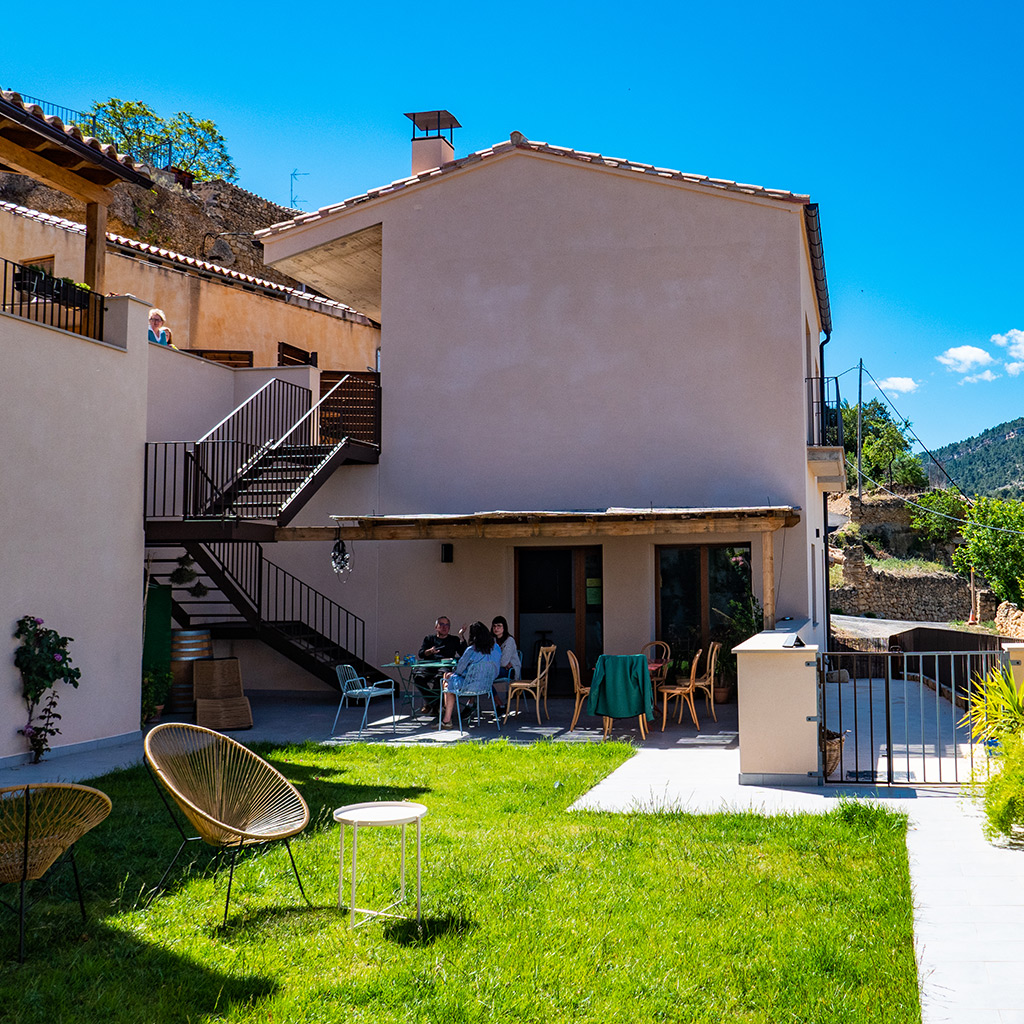
Filou, casa-jardín is an artist residency program in Belmonte de San José, Spain, aimed at bringing art to the village, attracting interesting people, and providing artists with an inspiring place to work. It offers accommodation in a peaceful house surrounded by a wild garden, a spacious studio, and blank walls for creative projects. The program includes pop-up residencies, such as one in May , emphasizing a serene valley environment among pines, almond, and olive trees.
La Casa de Belmonte
Belmonte de San José, Spain
La Casa de Belmonte is a writer's shelter and creative residency located in a solitary village surrounded by almond and olive trees in Spain. The residency provides dedicated workspace, accommodation, and access to natural surroundings for writers and creative professionals, with minimum stays of 3 days and typical stays of one to two weeks or longer.
Explore Spain
More city guides
Opportunity Intelligence
Ready to find your next residency?
Get a personalized shortlist — scored against your practice, discipline, and what you need right now.
See how Intelligence works →