City Guide
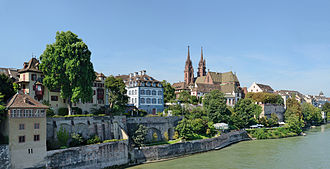
Basel, Switzerland
How to use Basel’s institutional ecosystem, residencies, and borders to push your practice further
Why Basel pulls so many artists in
Basel is often called Switzerland’s cultural capital, and that’s not just local pride. For a relatively small city, it has an unusually dense art ecosystem: major museums, a strong Kunsthalle tradition, serious galleries, and a network of artist-run and residency spaces that actually talk to each other.
You get two things at once: access to high-level institutions and enough calm to actually work. The city is compact, you can cross town quickly, and you are never far from a museum, a tram stop, or the river.
Basel also sits right on the three-country border of Switzerland–France–Germany. That means:
- Easy trips to nearby cities for exhibitions, research, or project partners.
- Possibility to live or shop just across the border if you are staying long-term and managing costs.
- A constant flow of artists and curators passing through for fairs, festivals, and institutional projects.
If your practice is visual, performance-based, or research-heavy, and you care about institutional dialogue and mobility, Basel is one of the strongest residency cities in Switzerland.
Core residency programs to know in Basel
Basel’s residency landscape is structured around a few key players that connect outwards into Swiss and international networks. If you start by understanding these, the rest of the scene becomes easier to map.
Atelier Mondial: a major exchange hub
Atelier Mondial is one of the most established residency structures linked to Basel and is often described as one of the oldest and largest residency exchange programs in Switzerland.
What you can expect:
- Live/work studios or apartments in the Basel region, especially around the Dreispitz area.
- International exchange with artists coming from and going to partner cities abroad.
- Connection to a professional network of curators, institutions, and local practitioners.
- In some cases, support for research and production, depending on the specific exchange or partner program.
Who it suits:
- Professional visual artists and interdisciplinary practitioners.
- Artists within exchange programs run by foundations, councils, or partner institutions.
- Practices that need serious studio time but also want access to curators, critics, and larger institutions.
Why it matters:
- It anchors many exchange schemes run through bodies like Pro Helvetia.
- It often collaborates with other Basel venues (for example, presenting work in places like Salon Mondial).
- It gives you immediate peers: you are not just alone in a flat; you are plugged into a residency cluster.
If you are applying through a partner (a regional council, a foundation, or a national arts body), check whether they place residents at Atelier Mondial and what exactly is covered: housing, stipend, travel, or production.
Kaserne Basel: performance, research, and exchange
Kaserne Basel is a central venue for performance, theatre, dance, and interdisciplinary projects. Its residency formats focus on exchange and research more than quiet isolation.
Key features:
- Three-month research residencies developed in cooperation with partners in Western Switzerland and Ticino.
- International residencies co-organized with Pro Helvetia liaison offices.
- Residencies that may include open studios, presentations, or public formats integrated into Kaserne’s broader program.
- A protective residency strand for artists forced to flee, in collaboration with Atelier Mondial and Villa Renata.
Who it suits:
- Performance artists, choreographers, and theatre-makers.
- Interdisciplinary artists whose work sits between visual art, performance, and research.
- Artists interested in cross-regional exchange within Switzerland and international collaboration.
How applications typically work:
- International artists usually apply through Pro Helvetia, which handles calls and selection for many three-month residencies.
- Swiss-based artists may work through partner houses in Ticino and Western Switzerland or contact Kaserne directly as indicated on its website.
For a performance or research-heavy practice, Kaserne is one of the most relevant bases in Basel. It also gives you a live audience and programming context, which can be rare in residency situations.
Braswell Arts Center: rehearsal and performance focus
The Braswell Arts Center has developed an artist residency concept centered on providing professional space for creation, rehearsal, and performance in Basel.
What it aims to offer:
- Free rehearsal and performance space for selected artists.
- Mentorship and development support tied to the Braswell community and its partners.
- Connections with local institutions, funders, and public audiences.
Who it suits:
- Emerging and established performance artists, dancers, and theatre-makers.
- Artists who need rehearsal time and a stage more than a quiet solo studio.
- Practices that benefit from feedback, coaching, and mentorship structures.
This initiative has been described as relatively fresh and evolving, so always confirm current details on the Braswell Arts Center website: whether the residency is active, what support is provided, and how the selection process works.
Edition/Basel at Druckwerk: intensive printmaking
Edition/Basel is a concentrated printmaking residency hosted at Druckwerk, a professional print studio in Basel. It is shorter than typical residencies but very technically focused.
What you can expect:
- 12-day sessions dedicated to printmaking.
- Access to intaglio, relief, lithography, and letterpress facilities.
- A collaborative, workshop-like atmosphere, often with 11–16 artists working in parallel.
- An end-of-residency exhibition, which has taken place at venues such as the Papiermühle Museum, Salon Mondial at Atelier Mondial, or Kaskadenkondensator.
- An expectation that participants contribute one or two works to the Edition/Basel archive.
Who it suits:
- Artists with some prior printmaking experience who want to push their technical range.
- Practices centred on editions, multiples, books, or paper-based work.
- Artists who prefer a short, intensive residency over a multi-month stay.
If your project needs specific printmaking techniques, Edition/Basel can be a strong complement to a longer residency at Atelier Mondial or another Basel program.
Pro Helvetia and how it ties Basel together
Pro Helvetia, the Swiss Arts Council, is not a place but a gateway into many Basel-based residencies.
It offers:
- Residencies of up to around three months for artists from Switzerland and from regions covered by its liaison offices.
- Time and space for research, reflection, and new work, sometimes with public outcomes.
- Placement at partner sites such as Atelier Mondial and Kaserne Basel, among others across Switzerland.
When you see Basel residencies described as “in collaboration with Pro Helvetia”, it usually means:
- A structured application process via Pro Helvetia’s own platform.
- Selection criteria aligned with the council’s priorities (quality of practice, relevance of context, exchange potential).
- Often, better support in terms of stipends and travel.
For many international artists, Pro Helvetia is the most direct path into Basel’s residency ecosystem.
How Basel actually feels as a residency city
You get a strong mix of institutional access, production resources, and cross-border movement. The city itself is walkable and tram-based, with a clear rhythm divided between intense event periods and calmer stretches ideal for studio work.
What Basel is especially good for
Basel tends to work best for artists who want to plug their practice into a broader context rather than disappear into total isolation.
Strong fits include:
- Visual arts with a contemporary or research-based orientation.
- Printmaking and edition-based work, especially through Druckwerk and Edition/Basel.
- Performance, theatre, and dance linked to Kaserne Basel and venues like Braswell.
- Interdisciplinary and conceptual practices that benefit from institutional dialogue and critical feedback.
- Projects tied to European networks, museum collections, or cross-border collaborations.
If your project needs advanced technical studios, curatorial conversations, or frequent visits to high-level exhibitions, Basel is a very efficient base.
Cost of living: what to expect
Basel is expensive, similar to other Swiss cities. The main pressure points are housing and going out.
Typical realities:
- Housing is the biggest cost. Residencies that provide accommodation remove a major burden.
- Eating out is costly; cooking at home reduces expenses significantly.
- Groceries are moderate to high; some artists use cross-border supermarkets in France or Germany for cheaper staples.
- Studio rent and workspaces are not cheap if you are organizing them yourself; residency-provided studios are valuable.
- Public transport is efficient and integrated but not low-cost. Many residencies provide a local pass or at least detailed guidance.
As a loose reference if you are staying independently (outside a funded residency):
- Budget stay: roughly CHF 1,800–2,500 per month, with shared housing and careful spending.
- More comfortable stay: CHF 2,800–4,500+ per month, depending on location and lifestyle.
Residencies that include housing and a stipend are particularly valuable in Basel. When you research programs, always ask directly what is covered and what is not.
Neighbourhoods artists actually use
Basel is compact, but different districts offer different energy levels and price points. If you are selecting housing or comparing residency addresses, these areas matter.
- Dreispitz
- A key redevelopment and creative area.
- Home to Atelier Mondial and close to studios, warehouses, and contemporary art spaces.
- Feels like an active production zone rather than a residential postcard.
- St. Johann
- Mixed residential and creative district with a local feel.
- Good access to the river and central Basel.
- Often attractive to artists looking for a lived-in neighbourhood, not a tourist area.
- Kleinbasel
- On the opposite side of the Rhine from the traditional old town.
- Lively, diverse, and sometimes slightly more affordable than the most central addresses.
- Popular with younger residents and creative workers.
- Old Town / city center
- Immediate access to major institutions like Kunstmuseum Basel and Kunsthalle Basel.
- Architecturally beautiful, but housing is usually pricier and less “studio-like.”
- Birsfelden and nearby suburban zones
- Just outside the core city, sometimes with more space for studios or slightly lower rents.
- Useful if your residency does not include housing and you are open to commuting by tram.
If your priority is production and residency community, being near Dreispitz gives you quick access to Atelier Mondial and nearby resources. If your focus is daily museum access and institutional visits, the centre or adjacent districts make more sense.
Using Basel’s art infrastructure while in residency
Basel’s main advantage is not only that residencies exist, but that they are surrounded by serious institutions and independent spaces. Using these during your stay can change the impact of your residency.
Institutions, galleries, and production spaces
Key places you will likely interact with:
- Kunsthalle Basel – A central venue for contemporary art with a strong exhibition program and discursive events.
- Kunstmuseum Basel and Kunstmuseum Basel | Gegenwart – Major museum complex spanning historical and contemporary work; useful for research, context, and collection study.
- Fondation Beyeler (nearby Riehen) – World-class exhibitions and a strong architecture-and-landscape setting; often a reference point in discussions about curating and display.
- Museum Tinguely – Focused on Jean Tinguely and kinetic work, with broader programming around movement, sound, and mechanical sculpture.
- Kaskadenkondensator – Independent art space known for experimental and performance-related programming; sometimes used for Edition/Basel or residency-related presentations.
- Kaserne Basel – Mixed venue for performance, theatre, music, and interdisciplinary projects, closely tied to residency and research formats.
- Atelier Mondial – Residency cluster with studios, events, and Salon Mondial as a presentation space.
- Druckwerk – Professional print studio hosting Edition/Basel and open to advanced print projects.
Basel also has a gallery ecosystem that intensifies during Art Basel but remains active year-round. Use it for:
- Studio visits and informal meetings with gallerists.
- Scouting spaces that align with your work for future projects or representation.
- Understanding how artists in your field are being framed within a Swiss and international context.
Transport, access, and moving around
Basel is very easy to move through, which matters when you are juggling studio time, meetings, and openings.
- Air: EuroAirport Basel Mulhouse Freiburg serves Swiss, French, and German sides, giving you a lot of flight options. It is close to the city, with direct bus and tram connections.
- Trains: Basel is a major rail hub with frequent trains to Zurich, Bern, Lucerne, Lausanne, Geneva, and cross-border routes to places like Strasbourg, Mulhouse, and Freiburg im Breisgau.
- Local transport: Trams and buses are reliable and well integrated. Many residency addresses are within a short walk of a tram stop.
- On foot and by bike: Central Basel is very walkable, and cycling is common, especially along the river.
If your residency includes a transit pass or support, use it to explore nearby towns and institutions as part of your research. Cross-border day trips can add a lot to a three-month stay.
Visas, permits, and admin basics
Requirements depend heavily on your nationality and the length and structure of your residency.
- EU/EEA citizens usually have relatively straightforward entry and short-term stay conditions, but longer stays can still require local registration or permits.
- Non-EU/EEA artists often need a visa for entry and may require a residence permit for stays beyond the usual short-stay period.
Residency hosts usually assist with:
- Official invitation letters.
- Proof of accommodation and residency period.
- Basic guidance on which local offices to contact after arrival.
However, you are usually responsible for:
- Checking which visa category fits your situation (especially if there are stipends or public performances involved).
- Confirming the maximum stay duration under your permit.
- Understanding whether paid performances, sales, or teaching are allowed under your status.
Ask each residency directly how they support visa processes and how previous residents with a similar passport handled it.
Timing, events, and how to position your application
The city feels very different depending on when you are there and how you align your project with local rhythms.
When to be in Basel
Different seasons serve different goals:
- Early summer is dominated by Art Basel, with intense gallery, museum, and off-site programming. It is powerful for networking but can be distracting if you need quiet studio time.
- Spring and autumn offer a strong exhibition calendar with more manageable social intensity and milder weather.
- Winter is quieter and can be ideal for deep focus, though the social and outdoor scene slows down.
Match your residency timing to your priorities. For example, if your project involves public programs or meetings, aligning at least a part of your stay with key exhibition periods can help.
Positioning your application for Basel residencies
When you apply, show that you understand what Basel specifically can give your project. Generic statements about needing “time and space” are not enough for competitive programs.
Useful angles to highlight:
- Context fit: Explain why Basel’s institutional ecosystem matters: access to museums, collections, or particular venues like Kaserne, Kunsthalle Basel, or Druckwerk.
- Residency alignment: Make the proposal match the program:
- Performance and research-based work for Kaserne Basel or Braswell.
- Print-focused projects for Edition/Basel.
- Visual arts and international exchange projects aligned with Atelier Mondial and Pro Helvetia.
- Exchange potential: Describe how you plan to engage with local artists, institutions, or communities, not just produce work in isolation.
- Practical clarity: Ask directly about housing, stipends, travel coverage, and production support so you understand the real cost of accepting the residency.
- Feasibility: Be clear about what you can realistically achieve in the given timeframe, especially for short formats like the 12-day Edition/Basel sessions.
Basel rewards artists who see it as an ecosystem rather than just a place to hide in a studio. If you can show how your project will interact with that ecosystem, your application becomes much stronger.
Residencies in Basel

Atelier Mondial
Basel, Switzerland
Atelier Mondial is an international and interdisciplinary artist residency program in Basel, Switzerland, hosting guest artists from partner institutions worldwide in its seven studios for stays typically lasting three to six months. It provides live-in studios, stipends for living expenses, and opportunities for open studios and exhibitions at Salon Mondial. The program also offers grants to regional artists from Basel, South Baden, and Alsace for residencies abroad in fields like visual arts, literature, fashion & textiles, dance & performing arts, and curation.

Verein Werkraum Warteck PP
Basel, Switzerland
Verein Werkraum Warteck PP is a collaborative cultural space in a former brewery in Basel, Switzerland, housing studios, workshops, and projects for artists, performers, craftsmen, and musicians under the concept of 'permanentes provisorium' emphasizing change and development. It supports creative work through shared facilities including artist studios and ateliers, with a residency program offering accommodation and studio for 2-3 months, where artists cover board, food, and travel expenses. The site hosts events, markets, workshops in areas like printmaking and bookbinding, and temporarily accommodates art fairs like Liste.
Explore Switzerland
More city guides
Opportunity Intelligence
Ready to find your next residency?
Get a personalized shortlist — scored against your practice, discipline, and what you need right now.
See how Intelligence works →