City Guide
Bad Münster - Ebernburg, Germany
Quiet railway station studios, Nahe Valley cliffs, and a residency built for deep work
Why Bad Münster-Ebernburg attracts working artists
Bad Münster am Stein-Ebernburg sits in the Nahe Valley, surrounded by cliffs, vineyards, and hiking paths. It’s technically a district of Bad Kreuznach in Rhineland-Palatinate, and it feels more like a retreat than a city. You go there for long stretches of uninterrupted studio time, not for an endless stream of openings.
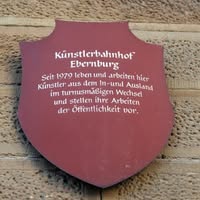
The big draw for artists is simple: quiet, landscape, and a serious commitment to studio work. The main local hub is Künstlerbahnhof Ebernburg e.V., a residency housed in a former railway station that has been hosting artists since the late 1970s. The combo of a dedicated studio, self-contained flat, and built-in exhibition makes it a solid choice if you want to focus and still show work by the end of your stay.
You’re also plugged into a wider arts geography. Bad Kreuznach is close by for basic cultural life and supplies, and larger cities like Mainz, Wiesbaden, and Frankfurt are reachable by train for bigger museums, galleries, and networking. Think: quiet base, with access to a much larger ecosystem when you need it.
Künstlerbahnhof Ebernburg: the residency inside a railway station
Künstlerbahnhof Ebernburg is the core reason most artists end up in Bad Münster-Ebernburg. It’s a nonprofit residency and exhibition venue in a former railway building, designed specifically to give artists serious working conditions in a calm setting.
What the residency actually offers
Based on information from the program itself, Transartists, and IGBK, you can roughly expect:
- Studio: About 76 m² of high-ceilinged, bright studio space, suitable for painting, sculpture, and larger works.
- Accommodation: A fully furnished flat in the same building (living room, bedroom, bathroom with shower, central heating).
- Facilities: Access to a kiln for ceramics and glass in the basement, plus a printing press you can use by arrangement.
- Set-up: Linen provided, washing machine available, and a layout that lets you move between living and working without losing focus.
The residency is described as suitable for all branches of art except those involving fire or water as core elements of the work. So if you rely on open flames, large-scale wet processes, or very specific industrial infrastructure, you’ll need to think carefully about what you can realistically do on site.
Duration and structure
The residency typically runs for around two months, and historically the program has offered roughly 2–3 scholarships per year. It’s geared primarily towards younger or early-career professional artists, but the real filter is whether you have a committed, coherent practice.
The structure is simple and studio-centered. You move into the flat and studio, work independently, and then shift into exhibition mode towards the second half of your stay.
Exhibition expectations
One of the defining features is the built-in exhibition during the second half of the residency. You’re expected to be present during opening hours (typically several afternoons per week), and you can show:
- work created during the residency,
- work made before you arrived,
- or a mix of both, depending on your project.
This exhibition is an important part of how the residency relates to the local public and the wider Nahe region. If you want a project with a clear end point and the chance to test your work in front of an audience, this setup works in your favor.
Costs, funding, and money logistics
The practical financial structure is important to understand before you apply or accept an offer:
- Provided: Studio and furnished flat are covered by the residency.
- On you: Living expenses (food, materials, insurance, local travel, etc.) and travel to and from the residency.
Some descriptions mention an 800 euro work purchase in certain cases, but this appears as an additional element rather than a guaranteed, across-the-board stipend. Treat it as a possible bonus, not the basis of your budget.
If you need external support, it’s wise to look at:
- home-country grants or mobility funding,
- local arts councils that support international residencies,
- small project grants to cover materials or travel.
Either way, plan your finances as if the residency covers space, not your cost of living.
Who this residency suits
Künstlerbahnhof Ebernburg is a good fit if you:
- want concentrated studio time in a quiet, semi-rural place,
- work in painting, sculpture, drawing, printmaking, ceramics, or glass,
- like having an exhibition built into the residency timeline,
- are comfortable working independently without constant programming or handholding.
It’s less ideal if you’re seeking:
- a big urban art market or frequent openings,
- intensive institutional mentoring or daily workshops,
- heavy fabrication facilities that go far beyond the existing studio, kiln, and press.
Living and working in Bad Münster-Ebernburg
The day-to-day rhythm in Bad Münster-Ebernburg is slow and practical. You wake up with cliffs and hills outside, work in a large studio, run errands in a small spa district or nearby Bad Kreuznach, and check in with the residency organizers and local visitors during your exhibition period.
Cost of living: what to expect
Compared to major German cities, the area is generally more affordable, but you should still think in “small German town” terms, not discount-living fantasy. Roughly:
- Groceries: Comparable to most of Germany; discount supermarkets and local shops are available in the wider Bad Kreuznach area.
- Cafés and meals out: Typically cheaper than big cities, but eating out regularly will still add up.
- Transport: Regional trains and buses are reasonably priced; you may want a local transport pass if you plan frequent trips.
- Extras: Studio materials, printing, and specialized supplies might require trips to larger cities or online orders.
Because your housing and studio are usually provided by the residency, your main ongoing costs are food, materials, personal insurance, and travel within or beyond the region.
Where to base yourself if not in the residency flat
If you’re visiting the area outside a formal residency, or you’re coming with a partner or family and want extra space, the two main options are:
- Bad Münster am Stein-Ebernburg: Very quiet, scenic, and close to the studio area. Good if your priority is focus.
- Bad Kreuznach: Slightly larger, with more shops, services, and transport. Better if you want easier logistics and a few more urban comforts.
Short-term rentals and guesthouses exist in both, but they can vary seasonally. If you’re combining a self-organized stay with a residency period, lock in accommodation early so you’re not scrambling in between.
Working conditions and practical studio tips
The residency studio is generous in size and light, which is a rare luxury if you usually work in cramped city spaces. To make the most of it:
- Plan projects that benefit from scale or open floor space.
- Think about materials that you can reasonably source locally or have delivered.
- If you use the kiln or press, communicate with the residency about technical specifics in advance.
The environment is ideal for research-based work, long drawing or painting cycles, or methodical process pieces that are easier when you’re not constantly interrupted. If your practice includes walking, observation, or site-responsive elements, the local landscape gives you plenty to work with.
Art context and how to connect beyond the residency
Bad Münster-Ebernburg itself is not a gallery hotspot. The art energy is concentrated in the residency and its exhibitions, with the broader cultural field spread out across Bad Kreuznach and the regional cities.
Local exhibitions and audience
The main public-facing stage for your work in town is the Künstlerbahnhof Ebernburg exhibition at the end of your stay. This pulls in:
- local residents and visitors,
- regional art-interested audiences,
- and occasional guests from nearby cities.
Because the exhibition is part of the residency’s identity, you can treat it as a small project in itself: consider how you use the space, whether you show process documentation alongside finished work, and how you communicate your project to a mixed audience that may include non-specialists.
Reaching out to the broader region
If you want to connect beyond the immediate area during your stay, there are several nearby city networks worth exploring:
- Bad Kreuznach: Local cultural centers and smaller exhibition venues; also your baseline for supplies and day-to-day errands.
- Mainz: Home to the Academy of Fine Arts Mainz and multiple exhibition spaces. Helpful if you’re looking for a more academic or institutional context.
- Wiesbaden and Frankfurt am Main: Larger museums, project spaces, and galleries, plus a more international art conversation.
You can research current spaces and events through regional listings, city cultural pages, and platforms like Transartists or IGBK, then line up studio visits, meetings, or day trips while you’re based in Bad Münster-Ebernburg.
Using the residency as a launchpad
The residency can work well as a focused production phase feeding into later exhibitions elsewhere. Strategically, you can:
- Develop a new series or body of work on site.
- Document the process and exhibition thoroughly for future applications.
- Build relationships with local visitors and regional institutions that might evolve into future projects.
If you frame the residency as a chapter in a longer project, rather than an isolated event, it becomes much easier to connect it back to your ongoing practice and career.
Transport, visas, and practical admin
The logistics are manageable, but you’ll want to line them up early if you’re coming from abroad or juggling other commitments.
Getting there and getting around
For international artists, the usual route is:
- Fly into Frankfurt Airport (FRA), which is the major international hub.
- Take regional trains towards Bad Kreuznach or Bad Münster am Stein.
- Continue by local train or bus to reach the residency site.
Once you’re there, daily movement is straightforward. Many artists manage with:
- walking or cycling locally,
- regional rail for trips to Bad Kreuznach and onward to Mainz or Frankfurt,
- occasional buses for more specific routes.
If your practice involves transporting large works or equipment, clarify with the residency what’s realistic in terms of storage and shipping.
Visas, insurance, and paperwork
For EU/EEA artists, moving to Germany for a short residency is usually straightforward. For non-EU artists, visa and insurance planning is essential. In general, expect to need:
- a valid passport covering the full duration of your stay,
- a visa if your nationality or length of stay requires it,
- health insurance valid in Germany,
- often liability insurance, as is common for German residencies.
Residencies often provide invitation letters or confirmation documents you can use for visa applications, so it’s worth asking for these early. Check the website of the German embassy or consulate in your country to see whether your planned stay falls under a short-stay Schengen visit or needs a separate national visa.
When to be there
The time of year changes the feel of the residency more than the structure:
- Spring and early summer: Great for walking, sketching outside, and using the landscape in your work.
- Autumn: Quieter but visually strong; good if you want atmosphere without crowds.
- Winter: Very focused, with fewer distractions; ideal if you thrive on interior work and long studio days.
For application cycles, always rely on the official Künstlerbahnhof Ebernburg website or listings on platforms like Transartists and IGBK, since dates and requirements can shift.
Is Bad Münster-Ebernburg the right residency location for you?
Bad Münster-Ebernburg suits artists who want serious time with their work, in a place where the landscape and studio are the main events. You won’t be running between five openings a night; you’ll be crossing a quiet town to a large, light-filled studio in a former railway station, then preparing an exhibition that anchors your time there.
If you’re planning a period of deep work, starting a new project, or finishing a major series, this context can be exactly what you need. If your current priority is heavy networking or commercial gallery exposure, you might treat Bad Münster-Ebernburg as a focused retreat phase, and build the bigger-city contacts in nearby Mainz, Wiesbaden, or Frankfurt while your work is taking shape in the studio.
Either way, if you respond well to space, quiet, and a clear structure with an exhibition at the end, Bad Münster-Ebernburg and Künstlerbahnhof Ebernburg are worth having on your residency radar.
Explore Germany
More city guides
Opportunity Intelligence
Ready to find your next residency?
Get a personalized shortlist — scored against your practice, discipline, and what you need right now.
See how Intelligence works →