
City Guide
Aubervilliers, France
Aubervilliers gives you Paris access, bigger spaces, and a serious studio culture without the center-city price tag.
Aubervilliers is not trying to be picturesque. That is part of its appeal. Just northeast of Paris in Seine-Saint-Denis, it has become one of the most useful places to work if you need room, production support, and a direct line into the Paris art scene without paying central Paris rents.
For artists, the city works less like a retreat and more like a working base. Former industrial buildings, transit access, and a growing concentration of artist spaces have turned Aubervilliers into a place where you can make work, meet people, and still get into Paris quickly when you need to.
Why artists end up in Aubervilliers
The first reason is simple: space. Aubervilliers has a stock of warehouses, factory buildings, and large plots that are easier to adapt for studios, installation work, fabrication, and shared production than most of central Paris. If your practice needs height, loading access, storage, or room for mess, this matters.
The second reason is cost. Aubervilliers is still part of the Paris metro area, but it is generally more workable than Paris intramuros for artists trying to stretch a budget. That can mean better odds on housing, more realistic studio rent, and fewer compromises on scale.
There is also a clear network effect. Once a few major institutions and studio platforms settled here, the area started to make more sense as a place to visit, work, and connect. You are not just renting square meters. You are joining a concentrated creative zone with curators, producers, and artists moving through the same small radius.
And then there is transport. Being able to reach central Paris by metro, tram, bus, or RER keeps Aubervilliers practical. You can work locally and still move through the broader Paris ecosystem for meetings, openings, archive visits, and production runs.
The main artist spaces to know
POUSH
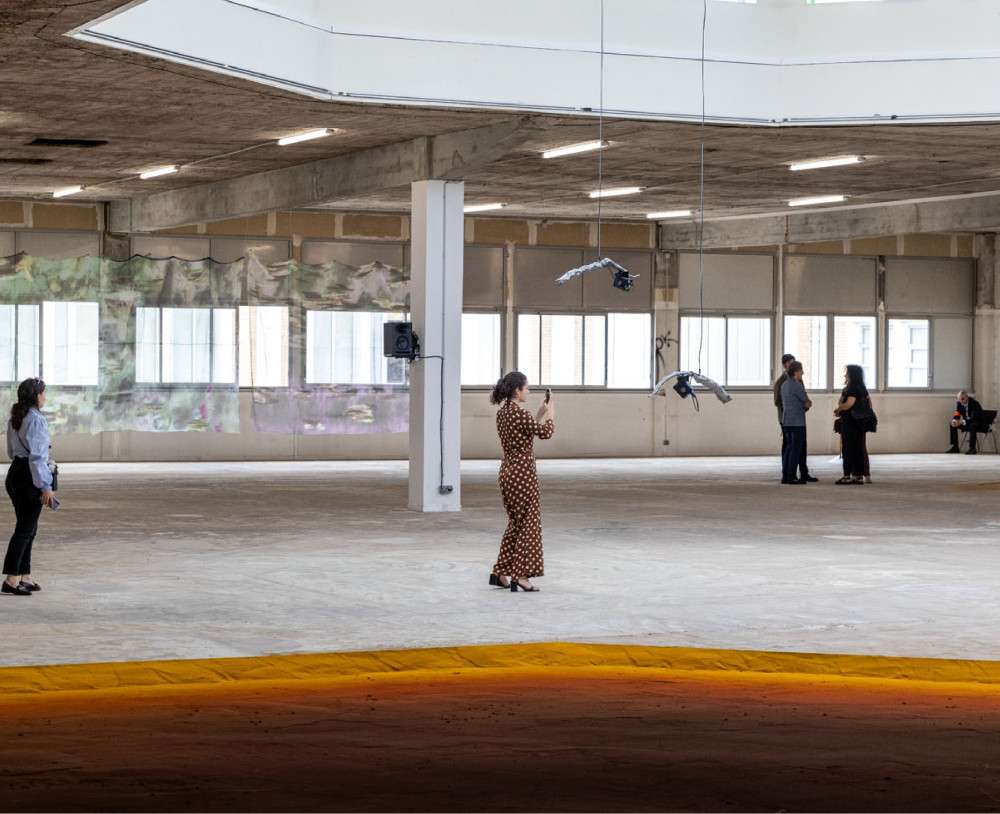
POUSH is one of the biggest names in Aubervilliers and a major reason artists now look at the city differently. It is a large studio and exhibition platform in a former industrial campus, created in 2020 and now home to a wide mix of artists from many countries.
What makes it useful is the combination of scale and visibility. POUSH brings together studios, public programming, and a dense peer community. That makes it especially appealing if you want to be around other artists working at a serious level, or if you benefit from exhibition traffic and spontaneous studio conversations.
It is a strong fit for artists working in installation, sculpture, painting, mixed media, and other practices that need room. It is less of a retreat and more of a live creative ecosystem. If your work benefits from shared energy and public-facing activity, this is a good place to watch closely.
You can learn more here: POUSH
Les Laboratoires d’Aubervilliers
Les Laboratoires d’Aubervilliers is a non-profit organization housed in a converted metal factory. It is one of the clearest examples of Aubervilliers’ strength as a place for research-based and interdisciplinary work.
The space includes studios, workshops, warehouses, accommodation for artists in residence, and administrative support. It is set up to support projects that sit between art, society, science, and performance, which makes it especially relevant if your practice is collaborative, experimental, or process-driven.
One of its strengths is the way it supports both artists and curators. That is useful if you are developing a project that needs technical backup, working relationships, or a structure that can hold something less standard than a solo studio stay.
It is a good match for performance artists, visual artists with research interests, and curators building interdisciplinary projects. If you want a residency that values thinking, testing, and cross-pollination as much as finished output, this is one of the most important names in the area.
You can learn more here: Les Laboratoires d’Aubervilliers profile
What kind of residency environment Aubervilliers actually offers
Aubervilliers is strongest as a production city. That means the residency culture here often looks different from the countryside model many artists picture first. You are more likely to find large shared studios, project spaces, institutional support, and exhibition-linked programming than a quiet retreat with isolated cabins.
This is useful if you want to stay active rather than disappear. You can work, meet people, attend events, and still stay plugged into the city. For many artists, that is a better fit than a residential program that removes them from their usual context entirely.
It also means Aubervilliers rewards artists who can use proximity well. A day here might include studio time, a visit to another artist’s space, a quick trip into Paris, and then back to the studio for production work. The city supports that kind of rhythm.
If your practice is heavy, large-scale, or needs logistical breathing room, the city’s industrial conversions are a real advantage. If your work is more private or silent, you may need to think carefully about studio placement, sound insulation, and access to calmer housing nearby.
How to think about cost and housing
Aubervilliers is not inexpensive in an absolute sense, because it is still part of the Paris region. But compared with central Paris, it usually gives you more room for the money. That can make a real difference if you are budgeting for studio, accommodation, materials, and transport all at once.
When you are looking at a stay here, the biggest savings usually come from studio access and scale. A space that would be impossible in the center may become possible here. That can change what you are able to produce on-site.
For housing, quality can vary a lot from one block to another. Look closely at heating, insulation, transport distance, and whether the space is actually suited to making art rather than only sleeping. If you work with dust, noise, solvents, or large materials, ask about ventilation and storage before you commit.
For short stays, being near a metro station is worth prioritizing. Living within easy reach of Line 7 or another strong transit link will save you time and keep the city from feeling fragmented.
Getting around and staying connected
Aubervilliers is well connected for a suburban Paris location. Metro Line 7, tram links, and buses make it easy to move between Aubervilliers, Paris 19th and 18th, Saint-Denis, Pantin, and central Paris. That matters if you plan to use the city as a base rather than a closed-off residency bubble.
For artists, this transport access is practical in a very direct way. It helps with gallery visits, supplier runs, material pickups, meetings, and shipping. It also makes the area easier to navigate if you are arriving from the airport or working with collaborators across the region.
If your residency or studio period is short, the best choice is usually the most connected one. A slightly smaller but well-linked space can be more useful than a bigger one that slows down your daily movement.
Who Aubervilliers suits best
- Artists who need large or flexible studio space
- Installers, sculptors, and makers working at scale
- Performance and interdisciplinary artists
- Artists who want Paris access without central Paris rent
- People who work well in a dense peer environment
- Artists interested in research, collaboration, and public programming
It is a less natural fit if you are looking for a rural pause, a postcard setting, or a highly polished campus atmosphere. Aubervilliers is urban, working, and still changing. That is exactly why it is interesting.
How to use Aubervilliers well
Think of the city as part base, part network. The strongest approach is often to combine local studio access with wider Paris-region mobility. You can make work in Aubervilliers, show or meet in Paris, and use the northeast corridor as a continuous artistic zone rather than treating each suburb as separate.
Visit the major spaces if you can. Open studios and public events are often the fastest way to understand whether the local rhythm fits your practice. POUSH gives you a sense of scale and community. Les Laboratoires d’Aubervilliers gives you a clearer picture of the city’s research and production side.
If you are planning a stay, focus on the basics: ceiling height, loading access, studio storage, ventilation, transport, and what kind of peer environment you actually want around you. Those details matter more here than glossy residency language.
Aubervilliers is one of those places that makes sense once you spend time in it. The appeal is not polish. It is the combination of room, access, and working energy. If that is what you need, this city can be a very good fit.
For related opportunities beyond the city itself, look at the wider Paris network, including the Art Explora residency program, which connects artists to the broader Paris scene through Cité internationale des arts.
Residencies in Aubervilliers
Explore France
More city guides
Opportunity Intelligence
Ready to find your next residency?
Get a personalized shortlist — scored against your practice, discipline, and what you need right now.
See how Intelligence works →