
City Guide
Amendolara, Italy
A small Calabrian hilltown with strong site-based residency opportunities, especially for artists interested in archaeology, landscape, and slow research.
Amendolara is not the kind of place you go for gallery hopping. You go there for time, space, and a project that needs history under its skin. Set in northeast Calabria near the Ionian coast and within reach of the Archaeological Park of Sibari, the town gives artists a quieter kind of residency experience: fewer distractions, more landscape, and a stronger pull toward site-responsive work.
If you are looking for a residency that feels grounded in place rather than in art-world speed, Amendolara is worth your attention. The area is especially good for artists who want to work with archaeology, memory, ecology, and local community rather than arrive, produce fast, and leave.
Why artists go to Amendolara
Amendolara sits between hills and sea, which already gives it a different rhythm from the big Italian art cities. The town is small, and that matters. You are more likely to have long stretches of focus, to notice the light, to walk the same streets daily, and to build real relationships with people who live there.
The other major draw is the historical depth of the region. Southern Calabria carries layers of Magna Graecia, archaeology, Mediterranean exchange, and shifting local identity. If your practice responds to place, archives, ruins, or inherited stories, the area gives you a lot to work with.
Artists also come here for a slower, more reflective environment. That can be a gift if you need space to think through a project, test materials, or step away from a crowded studio scene. It is less useful if you need a dense network of galleries, collectors, or frequent city events.
The residency to know: In-ruins
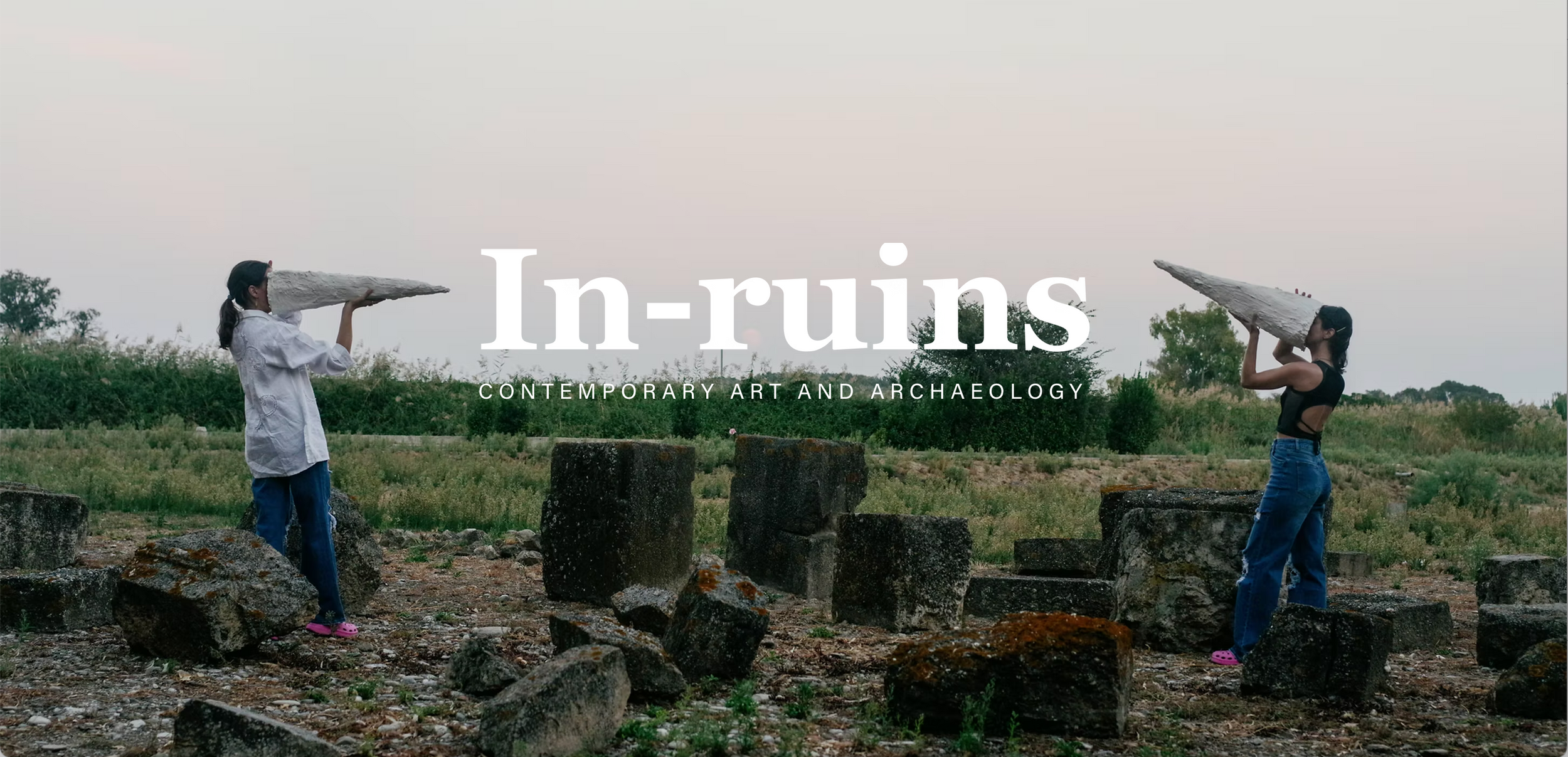
The most directly relevant residency in Amendolara is In-ruins, a program organized by Associazione Archeofuturo. It is built around the meeting point of contemporary art and archaeology, and the edition connected to Amendolara took place at the Sibari Archaeological Park and in town.
What makes In-ruins stand out is its open structure. This is not a program pushing you toward a fixed final product. Instead, it gives you room to research, look, and respond to the site as you work. That makes it especially strong for artists who are comfortable with process-led practice.
What In-ruins gives you
- Accommodation and studio space
- Direct access to archaeological sites
- An interdisciplinary setting
- Space for research-based and site-specific work
- Contact with other artists, curators, and researchers
What the program tends to explore
- Memory
- Mythology
- Ecology
- The political life of archaeology
- Contemporary responses to ancient sites
That mix makes sense in Amendolara, where the surrounding landscape and archaeological context are part of the residency itself, not just a backdrop.
In-ruins is a particularly strong fit if you work in installation, performance, moving image, sculpture, research-based practice, or any form that benefits from fieldwork and a close reading of place.
What the local context feels like
Amendolara is small enough that daily life stays simple. You are not managing the pressure of a large city. Instead, you are usually dealing with the practical realities of a rural or semi-rural setting: transport planning, limited public transit, and the need to organize your days a little more carefully.
That tradeoff is often worth it. Costs are generally lower than in the major Italian art centers, and residency housing, when included, does a lot of the financial work for you. Food is usually manageable, local eateries tend to be affordable, and the main thing to plan around is mobility.
If you are staying in or near the historic center, daily life will likely be easier. The center is usually the most walkable part of town and the best place to feel connected to local routines. The outskirts can be quieter, but they make more sense if you already have car access and want more solitude.
There is not a heavy commercial gallery scene here. Expect small cultural venues, municipal or foundation-run spaces, and exhibition opportunities tied to residencies, talks, or community events. That is not a weakness if your practice thrives in a more focused setting. It just means you should come with realistic expectations.
How the studio situation usually works
In and around Amendolara, residency studios are typically private or semi-private and more practical than polished. Programs in this part of southern Italy tend to value usable workspace over luxury. That usually means enough room for the way you actually work, access to the site or surrounding area, and a setup that supports making rather than display.
For artists used to large institutional studios, the spaces may feel modest. But if your work depends on concentration, research, and material testing, that can be enough. The important question is not whether the studio looks impressive. It is whether it supports your process.
Before you go, ask about light, storage, ventilation, noise, and whether you will need to share any part of the workspace. If your work has specific technical needs, spell them out early. Residencies in smaller towns are often flexible, but only if they know what you need.
Getting there and getting around
Transportation is one of the biggest practical factors in this area. Amendolara is not the sort of place where you can assume constant bus or train service. Car access is often easier, especially if your residency includes visits to archaeological sites, rural locations, or partner venues outside the town center.
If you do not plan to drive, check transport details before confirming your stay. Ask about pickup options, shuttle service, nearest rail connections, and whether the residency sites are walkable from your housing. In a place like this, those questions matter more than they would in a city.
For artists traveling from outside the European Union, visa planning also matters. The right paperwork depends on the length of your stay, your nationality, and whether the residency includes fees, stipends, or formal host documentation. Ask the organizers early for invitation letters, proof of accommodation, and anything else your consulate may request.
When Amendolara works best
The most comfortable seasons for creative work in southern Calabria are usually spring and early autumn. The weather is milder, the light is strong without being punishing, and outdoor research feels more manageable. If your work involves walking sites, photographing landscapes, or spending time outside, those months are especially useful.
Summer can be hot, which is not always a problem if you like intensity and long evenings, but it can make fieldwork more tiring. If you are choosing when to visit, think about the kind of studio energy you need. For many artists, spring and autumn offer the right balance of focus and mobility.
Residency opportunities in this region often follow seasonal patterns, so it makes sense to watch for calls across late winter, spring, and autumn depending on the program.
Who Amendolara is a good fit for
This is a strong destination if you want a residency shaped around place, history, and research. It tends to suit artists who are comfortable making work without constant external feedback and who can use a small-town setting as part of the project itself.
- Artists working with archaeology or heritage
- Site-specific and landscape-based practices
- Research-led, interdisciplinary work
- Installation, performance, sculpture, and media art
- Artists who want quiet time and room to think
It is less suited to artists who need a busy nightlife scene, a large gallery market, or constant institutional networking. If your work depends on those things, you may want to pair Amendolara with time in a larger nearby city.
Nearby southern Italy programs worth comparing
If you are building a broader residency search across southern Italy, two nearby references can help you compare what Amendolara offers with other regional models.
Torna al Sud in Padula is a good example of a fully supported, short residency with private room, private studio, and a small number of residents at a time. It is not in Amendolara, but it gives you a sense of the kinds of artist-centered programs found in the south.
Art Center Padula is another useful benchmark. It offers short stays, private rooms, luminous studios, and a low-pressure structure where artists can focus on reflection, production, or experimentation.
Those programs are different in format, but they help clarify what matters most to you: duration, privacy, support, and how structured you want your residency to feel.
Final take
Amendolara is best understood as a place for depth rather than volume. The residency scene is small, but the setting is strong: archaeological, coastal, rural, and historically layered. If you want time to work closely with a site and let the place shape the project, this town can offer exactly that.
Start with In-ruins, ask practical questions early, and think carefully about how much independence you want. If your practice can grow in a quiet, research-rich environment, Amendolara has real value.
Explore Italy
More city guides
Opportunity Intelligence
Ready to find your next residency?
Get a personalized shortlist — scored against your practice, discipline, and what you need right now.
See how Intelligence works →