
City Guide
Accra, Ghana
How to plug into Accra’s residencies, art scene, and daily life as a visiting artist
Why Accra works so well for residencies
Accra gives you something a lot of residency cities don’t: a serious art ecosystem, direct access to curators and galleries, and enough chaos to keep you awake in the studio. It’s a place where you can work on new pieces in the morning and be at an opening or open studio with major artists that same evening.
You get:
- A dense contemporary art scene – galleries, foundations, residency spaces, and collectors paying attention.
- Local and diasporic networks – Ghanaian artists, artists from across Africa, and the diaspora all feeding into the same circuit.
- Real visibility – the chance that curators, writers, and collectors will actually see the work you make there.
- Urban-coastal balance – residencies often build in time in the city plus a more secluded retreat phase.
If you want a residency that is rooted in contemporary African conversations instead of being a bubble, Accra is one of the stronger options right now.
Key residencies in Accra and how they differ
Accra doesn’t have a huge number of programs, but the ones that exist are influential. Think quality and visibility rather than volume.
Noldor Artist Residency
Where: Labadi, with a retreat on the outskirts of Accra
Core idea: One emerging African artist (from the continent or the African diaspora) gets a four-week, highly structured residency focused on production and personal growth.
What the structure actually feels like:
- Main studio phase – Most of the time is spent in a large warehouse studio (around 150 square meters) in Accra’s seaside Labadi district. This is where you live and work. Expect an intense, focused period with the city right there when you want it.
- Retreat phase – The final week happens at a private equestrian residence on the edge of the city. It’s designed as a psychological and emotional reset: more reflection, less noise, more processing of the work and experience.
What it offers:
- Dedicated warehouse studio space
- Housing built into the program
- Curatorial attention and professional guidance
- Support from a clinical psychologist focused on both personal and artistic development
Who it’s really for: An emerging African artist with technical training but limited access to infrastructure and materials. If you’re in that position, Noldor is designed around you: it’s not just a space to produce; it’s a structured period to reset your practice and profile.
What to expect creatively: Think of Noldor as a residency that wants a defined project arc. It suits artists who are ready to commit to a series, a body of work, or a clear research direction that benefits from both a big studio and psychological support.
dot.ateliers | south labadi Artist Residency
Where: South Labadi, Accra, with accommodation in Accra city centre
Founded by: Amoako Boafo
Core idea: Bring mark-makers (with a focus on painting and drawing) into a high-energy studio environment in the heart of Accra’s contemporary scene, with community and visibility baked in.
What it offers:
- Coverage of travel expenses to Accra
- Materials stipend
- Dedicated studio space at dot.ateliers
- Accommodation in central Accra, close to the residency space
- Community engagement with local creatives and the residency network
- Open studio opportunities during the residency
- Participation in a group show at the end of the year
The funding is described as partially covered, so you still need to budget for your own living costs (food, local transport, extras).
Who it suits:
- Artists who identify strongly as mark-makers – painters, drawers, mixed-media artists working on surfaces.
- Artists interested in being very visible and present: talking about work, engaging with visitors, and showing up for the wider studio community.
- Artists of any nationality, gender, or background who want to test their practice against a plugged-in, fast-moving scene.
What to expect creatively: dot.ateliers is good if you like being around other artists, not just working alone. Open studios, group shows, and community interaction are part of the rhythm, so it suits someone who wants both production and public-facing moments.
Gallery 1957 Artist in Residence
Where: Accra, linked to Gallery 1957’s spaces and ecosystem
Core idea: A residency woven into one of Accra’s most visible commercial galleries, with potential routes to exhibitions and collector networks.
What it usually means:
- A period of studio work in Accra connected to the gallery’s curatorial team
- Opportunities to show work or develop projects in dialogue with the gallery
- Exposure to a serious network of collectors and institutions
Who it suits:
- Artists who already have a clear practice and want to deepen it in conversation with a gallery
- Artists for whom gallery representation, sales, or institutional exhibitions are part of the next step
What to ask the gallery: Details can be case-by-case. If you are invited or applying via a call, ask directly about duration, expectations, housing, and whether there is a production budget or stipend.
Other Ghana programs you might cross-check
While not in Accra itself, you will often see these mentioned when researching:
- Berj Busua Artist Residency – based in Busua, a coastal town in Western Ghana. It’s tied to Berj Art Gallery in Accra and supports transdisciplinary practices (visual arts, fashion, film, performance, dance, artistic research). If you’re comparing city versus coastal experiences, this is a useful reference point.
- Independent and cross-cultural programs – occasionally, nonprofit or cross-cultural initiatives host artists in Accra or nearby, often with an exhibition in the city. These tend to be irregular, so keep an eye on platforms like On the Move, ArtConnect, and local arts networks.
The art ecosystem you’ll plug into
Accra’s residencies work well because they sit inside a wider ecosystem. Knowing a few key players before you land helps you map your time better.
Galleries, foundations, and spaces
- Gallery 1957 – a heavyweight in Accra’s contemporary scene, with an international collector base and a program that ranges from painting to installation and performance.
- Nubuke Foundation – an important cultural institution; expect exhibitions, public programs, and education initiatives that often span generations and disciplines.
- Artist Alliance Gallery – long-standing, with a mix of modern and contemporary Ghanaian art. A good place to understand some of the local art history that anchors the current scene.
- ADA Contemporary – another space focused on contemporary artists, often with a regional or continental lens.
- Noldor Artist Residency and dot.ateliers – not just studios; both operate as exhibition and gathering spaces at times, with open studios, shows, and events.
Networks and community
Behind the institutions there are strong informal networks:
- University communities – KNUST alumni and Ghanaian art school networks are a backbone of the scene; many artists showing in Accra come through these routes.
- Curators and independent organizers – follow galleries and spaces on social media and you’ll quickly see who is curating what, and where conversations are happening.
- Residency alumni circles – previous residents often stay engaged with Accra and can be key contacts for studio visits and collaborations.
If you’re on residency, use open studios, talks, and exhibition nights to invite people into your work. Accra rewards artists who are proactive and generous with dialogue.
Where you might live and work in Accra
Residencies often decide your base for you, but it helps to understand the city layout to set expectations and plan your days.
Key neighborhoods for artists
- Labadi – seaside; home to Noldor’s warehouse studio. Expect a mix of local life, coastline, and easy access to other central areas.
- South Labadi – site of dot.ateliers. Being here means your daily routes will often be between the studio, the beach, and central-city events.
- Osu – busy, central area with restaurants, bars, and some cultural spots. Good for social life and meeting people, but can be more expensive and noisy.
- Airport Residential – more polished, with embassies, hotels, and higher prices. Practical if your residency puts you here because it is well-connected.
- East Legon – residential, popular with professionals and expats; decent amenities, but factor in traffic if you need to commute to Labadi or Osu.
- Cantonments – diplomatic and upscale, relatively quiet, with strong infrastructure but higher costs.
- Adabraka and central corridors – more urban, with potential for more affordable options and quick access to many parts of the city.
If your program houses you in “Accra city centre”, ask for the exact neighborhood. Distance and traffic shape your day more than the map suggests.
Studios and materials
If your residency provides a studio, you’re set. If not, or if you extend your stay:
- Ask galleries and artists about short-term studio rentals or shared spaces.
- Look into artist-run studios and workshops; you may be able to rent a corner, especially if you’re working small.
- Use residency visits to ask technicians and fabricators about what’s realistic to produce locally (framing, metal work, carpentry, etc.).
Materials worth planning around:
- Bring any specialty pigments, papers, small tools, or tech that you absolutely rely on.
- Budget extra for large canvases, wood, and any imported supplies you can’t fly with.
- Confirm whether your residency’s material support is a fixed amount or based on a list of needs.
Cost of living for residents
Accra can surprise you cost-wise: local food and some basics are affordable, but accommodation, transport, and imported goods push the budget up quickly.
What tends to cost the most
- Housing – often the single biggest cost if it’s not covered. Central and expat-heavy areas are pricier.
- Transport – ride-hailing is cheaper than many Western cities but adds up fast if you’re criss-crossing the city daily.
- Materials – anything imported: specialty paints, paper, tech, or specific tools.
- Electricity and cooling – air conditioning is energy-intensive; if you’re paying utilities, factor this in.
- Eating out – local spots are affordable; international and expat-oriented venues are closer to European or North American prices.
Fully funded residencies soften a lot of this. Partially funded programs (like dot.ateliers) still require you to budget realistically for food, transport, and anything beyond the included materials support.
Getting around the city
Accra is not a walking city in the way compact European cities are, but you can move around fairly easily once you understand the options.
Daily transport
- Ride-hailing apps – common and widely used by artists, especially for studio visits, openings, and late nights.
- Taxis – easy to find; fares are usually negotiated or set by local norms rather than meters.
- Trotros – shared minibuses. Very cheap and a key part of local life, but less predictable and harder to navigate at first if you don’t know the routes.
Traffic can be heavy and inconsistent. When scheduling studio visits, openings, or talk slots, give yourself more time than the map suggests.
Arriving and leaving
- International artists fly into Kotoka International Airport (ACC).
- Many residencies will advise you on arrival logistics or arrange an airport pickup, especially if they cover travel.
Visas and paperwork
Visa conditions change, so you always need to check the latest information with the Ghana Immigration Service and your nearest Ghanaian embassy or consulate.
General points to keep in mind:
- Many nationalities need a visa arranged before travel.
- A residency invitation letter can be helpful when you apply.
- For multi-week stays, consulates may ask for accommodation details and exact dates.
When you’re accepted into a residency, ask them for:
- An official invitation letter with program dates
- Confirmation of housing arrangements and address
- A contact person and phone number
- Any previous experience they have supporting artists through the visa process
Climate, seasons, and timing
Accra is warm year-round, but the combination of heat, humidity, and dust matters if you’re working with certain materials.
Seasonal realities
- Dry seasons – usually easier for travel and logistics; less rain interrupting trips to framers, printers, or fabricators.
- Harmattan – a period when dry, dusty winds can affect air quality and visibility. This can influence how you store work, especially works on paper or delicate surfaces.
Residencies like Noldor often run in the later part of the year. For your own planning, think about how heat and humidity affect your materials and energy levels, and adjust your studio routine accordingly (mornings and evenings may be the most productive).
Who Accra serves best as a residency city
Accra is particularly strong for artists who want:
- Connection to contemporary African discourses – questions around identity, diaspora, materiality, and urban life sit very close to the surface here.
- Interaction with galleries and curators – Accra is not an isolated retreat; it is plugged into markets and institutions.
- Community-facing practice – if you build projects around collaboration, conversations, and public engagement, you’ll find fertile ground.
- Studio-based work – painting, drawing, sculpture, installation, and mixed media all translate well into the existing residency infrastructure.
You may struggle more if you need highly specialized fabrication, extremely low-cost long-term living, or a completely rural set-up with almost no city contact. In that case, combining Accra with a non-city residency in Ghana might be a better strategy.
How to approach applications strategically
To make the most of Accra’s residencies, think about how your proposal intersects with the city and its art community.
- Be specific about why Accra – reference the city’s art infrastructure, galleries you want to connect with, or local histories relevant to your work.
- Define your production needs clearly – outline what you can bring, what must be sourced locally, and how you will adapt if materials shift.
- Show that you’re ready for dialogue – residencies here often end with open studios or group shows. Indicate how you talk about your work and how you see audiences engaging with it.
- Ask practical questions early – studio hours, access, security, storage, materials support, documentation, and how public-facing the residency is.
- Align your timing – monitor open calls through the residencies’ own channels, On the Move, ArtConnect, and gallery newsletters. Many programs are annual or cyclical, and planning ahead increases your chances.
If you go in with a clear sense of what Accra can give you and what you want to give back to the city, the residencies there can shape your practice long after you leave.
Residencies in Accra

dot.ateliers
Accra, Ghana
The dot.ateliers residency, launched in December 2022, is a creative program located in Accra, Ghana, specifically in the city center of South Labadi. It was established to address the need for non-commercial artistic opportunities that promote the exchange of perspectives, knowledge, and experiences. The residency offers a supportive environment that fosters creativity, collaboration, and artistic exploration. Open to both emerging and established artists, dot.ateliers provides the resources necessary for artists to deepen their practices while engaging with the local and international creative community. The serene and inspiring setting of the residency contributes to a transformative experience for participants, aligning with the organization’s core value of community building.

Merian Institute for Advanced Studies in Africa (MIASA)
Accra, Ghana
The MIASA Artist Residency, hosted at the University of Ghana in Accra, offers artists the opportunity to engage in interdisciplinary collaboration with scholars and researchers. This three-month residency program focuses on sustainable governance and associated themes such as peace, democracy, migration, human rights, and African cities. Artists from diverse creative fields (visual, performing, digital, and textual arts) are invited to contribute to ongoing research and scientific discussions, while allowing the arts to enrich and challenge traditional academic perspectives. During their stay, artists are expected to interact with fellows and the broader academic community at MIASA. The residency is fully funded, providing a stipend, accommodation allowance, and project funding.
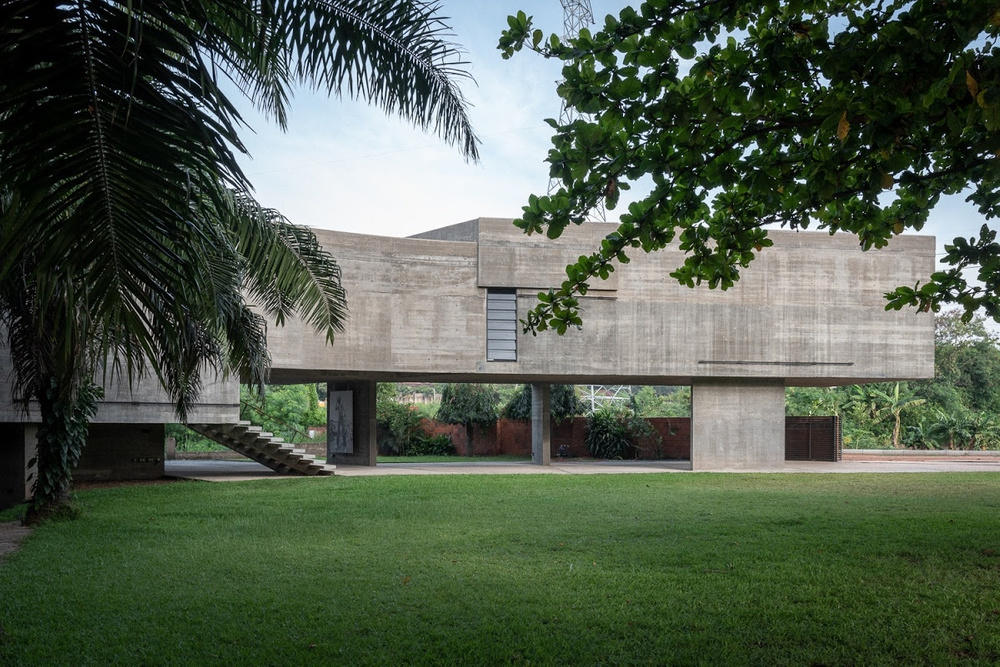
Nubuke Foundation
Accra, Ghana
The Nubuke Foundation offers artist residencies at its Centre for Textiles and Clay in Loho, near Wa in Ghana's Upper West region, providing a self-directed program for artists, writers, designers, curators, scholars, and creatives to explore their practice. Started in 2022 under ACP-EU support, it has hosted over 15 participants and emphasizes textiles and clay while being open to diverse fields. Residents produce work-in-progress, public projects, exhibitions, and community engagements.
Explore Ghana
More city guides
Opportunity Intelligence
Ready to find your next residency?
Get a personalized shortlist — scored against your practice, discipline, and what you need right now.
See how Intelligence works →