Artist Residencies in Viru-Nigula
1 residencyin Viru-Nigula, Estonia
Why Viru-Nigula is interesting for artists
Viru-Nigula is a small coastal municipality in Lääne-Viru County, up on Estonia’s north shore. You’re not going there for a gallery district or a packed opening calendar. You go because it offers quiet, space, and a slower rhythm that’s hard to get in Tallinn or other cities.
The area works well if you want to sink into a project that needs focus rather than constant external stimulation. Think long writing days, editing film, sketching, planning a new performance, or testing ideas that don’t need a theater or white cube yet.
Viru-Nigula makes sense for you if you are:
- a writer, translator, composer, researcher, or curator needing uninterrupted hours
- a visual artist or maker working on a series, portfolio, or material-based project
- a performance, new media, or experimental artist wanting distance from big institutions
- someone who prefers a farmyard, forest, or field over a city street outside your studio
Pardimäe Lokaal: the key residency in Viru-Nigula
Location: Kanguristi village, Viru-Nigula parish, Lääne-Viru County, Estonia
Good for: performance artists, visual artists, writers and translators, musicians, filmmakers, new media artists, new circus, producers, curators, directors, cultural theorists, and people in between disciplines.
What Pardimäe Lokaal actually feels like
Pardimäe Lokaal is set up as a place for both professional and “not so professional” artists, which in practice means it’s more about real work and curiosity than about your CV. The residency is openly against relying on “giant traditional institutions,” and that attitude runs through its description and setup.
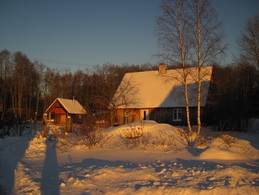
Instead of a polished campus vibe, expect something closer to a working farm and creative outpost:
- Accommodation in a log house with 2 rooms and a kitchen
- Outside toilet rather than hotel-style bathrooms
- Sauna, which in Estonia is essentially a second living room and decompression space
- Shed and basement that can double as storage, rough studio, or project-space extensions
- Access to a farm complex where different rooms and corners can become workspaces
The residency emphasizes the chance to fully concentrate on your work and ideas. The atmosphere is independent and informal: fewer rules, more responsibility on you to decide what your time looks like.
Who Pardimäe Lokaal suits (and who it doesn’t)
Pardimäe Lokaal is a strong fit if you:
- are comfortable working self-directed without a fixed program
- like a rural, slightly rough-around-the-edges setting more than sleek design
- want to focus deeply on a specific project or research
- are open to living with basic amenities (log house, outside toilet, shared spaces)
- are in a phase of your work where process matters more than polished public outcomes
It’s less ideal if you need:
- a tight schedule of talks, critiques, and public events
- a fully equipped specialized workshop (e.g. large-scale printmaking or metal fabrication)
- fast, frequent public transport at your door
- urban social life or nightlife as part of your daily rhythm
Types of work that thrive there
Because the setup is flexible and rural, Pardimäe Lokaal lends itself to:
- Writing and translation: books, plays, scripts, research texts, grant applications, portfolios
- Performance and choreography research: sketches, scores, dramaturgy, small experiments without full tech
- Visual art: drawing, painting, photography, small sculpture, conceptual work, documentation
- Film and sound work: editing, composing, sound design, storyboarding, planning shoots
- New media / new circus / experimental practice that benefits from space to think and try things
If your practice is heavily digital, bring the gear you need and check in advance about internet stability. If your work is more physical, think through what can be improvised on-site versus what must travel with you.
Other residencies in the wider region
Viru-Nigula itself is small. If you are researching a longer Estonian stay or want to combine residencies, it helps to know what exists in the broader region. These are not in Viru-Nigula but they often come up in the same conversations.
Narva Art Residency (NART)
Location: Narva, in the historic Kreenholm area, on the Estonian–Russian border
Narva Art Residency (NART) is a more structured, public-facing residency compared to Pardimäe Lokaal. It hosts:
- residencies for artists across disciplines (visual art, music, performance, architecture, design, film, literature, curatorial work, and more)
- exhibitions and project presentations
- talks, workshops, and educational events
NART is operated by the Estonian Academy of Arts with local and national partners, so the feel is closer to an institution. It suits you if you want to connect with an audience, local community, and a broader professional network while you’re in eastern Estonia.
MASSIA
Location: Rural Estonia (not in Viru-Nigula, but often mentioned by artists interested in self-organization)
MASSIA is an artist-run, self-organised residency space where residents are invited to “motorise their own capacity” to create work and knowledge. There is no traditional staff structure; residents participate in shaping collective life and activity.
If you like Pardimäe Lokaal’s independence and want to experience another self-directed, low-hierarchy context in Estonia, MASSIA can be a useful complement.
Other rural and quiet residencies
Several other Estonian residencies share some DNA with a Viru-Nigula stay, even if they are geographically distant:
- Arvo Pärt Centre Creative Residency in Laulasmaa, focused on composers, performers, and related creators, with a strong emphasis on silence and contemplative time. See details at arvopart.ee.
- Maajaam in southern Estonia, oriented toward artists, designers, sound artists, filmmakers, and others working with nature, technology, or site-specific ideas.
These spaces are not day trips from Viru-Nigula, but they help frame what “rural residency” can mean in the Estonian context if you are planning a longer circuit.
Daily life and cost of living in Viru-Nigula
You can think of Viru-Nigula as the opposite of a big-city residency where everything is on your doorstep. The trade-off is lower costs and more space for you and your work.
Budgeting realistically
Costs vary per residency, but a few general points:
- Accommodation tends to be more affordable than Tallinn, often simple and functional rather than luxurious.
- Food and everyday items are usually cheaper than in major cities, but you may need to travel to reach shops.
- Transport can eat into your budget if you rely on taxis or car rentals, especially for remote locations.
- Materials may need to be ordered in or brought with you; local specialized art suppliers are limited.
Before you commit, ask the residency:
- Exactly what is covered (housing, studio, utilities, internet, basic tools)
- What is not covered (food, travel, production budget)
- Whether any local discounts, shared food systems, or community arrangements exist
What “neighbourhood” means here
Viru-Nigula isn’t a city divided into creative districts. Instead, you are choosing between specific villages, rural plots, and how close you want to be to basic services.
When you assess a residency, think about:
- Distance to the nearest grocery shop and how you’ll get there
- Bus stops or train connections and their schedules
- Walking paths and surroundings (forest, fields, coast) that might feed your work
- How reachable your host is if you need help or local contacts
If you like isolation, being slightly farther out can be a plus. If you know you need regular human contact, being within reach of a village center or a nearby town might keep you balanced.
Studios, exhibition options, and art infrastructure
Viru-Nigula is primarily a place to make work, not to tour galleries. The infrastructure is residency-centered and quite informal.
Working spaces
At residencies like Pardimäe Lokaal, you’ll typically work in:
- your own room or shared indoor workspace
- adapted farm buildings such as sheds, barns, or basements
- outdoor areas if your project is site-specific or land-based
The upside is flexibility: you can often reconfigure spaces, shift furniture, or occupy unusual corners for your project. The downside is that you might not have specialized equipment unless you bring it or arrange it.
Showing work and meeting audiences
Viru-Nigula itself doesn’t have a large gallery circuit, but you still have options:
- Informal sharings on site: open studios, small showings, conversations with locals, or work-in-progress try-outs with other residents.
- Connections to bigger centers: you can plan a presentation, meeting, or research visit in places like Rakvere or Tallinn during or after your stay.
- NART in Narva: if you are combining residencies, Narva’s exhibitions and talks give you a more public platform.
If public outcome is important for you, clarify this with the residency in advance and ask what has been possible for previous residents.
Getting to Viru-Nigula and moving around
Reaching Viru-Nigula is part of the experience. You’ll most likely pass through Tallinn or another larger town and then head out by road.
Typical routes
Artists usually arrive in Estonia via:
- Tallinn Airport for most international flights
- Ferry connections to Tallinn if coming from nearby countries
From there, you continue with:
- Bus towards Lääne-Viru County, then a local connection or pickup
- Car (rental, car-share, or a host’s car) especially if your residency is in a small village
- Sometimes a mix of train + bus + taxi, depending on the exact location
Practical transport advice
To keep logistics smooth, you can:
- Check national and regional bus schedules ahead of time, including weekends.
- Ask your residency if they can pick you up from the nearest town or stop.
- Plan how you’ll transport materials or instruments if you have bulky items.
- Allow extra time for travel in seasons with snow, ice, or storms.
If you expect to move around a lot during your stay (for research, site visits, or filming), a car can save you a lot of time and effort. If you want to stay put and work, you might be fine with minimal transport once you arrive.
Visas and entry basics
Estonia is part of the Schengen Area, so your entry situation depends on where you are coming from.
Artists from the EU/EEA/Switzerland
Citizens of EU, EEA countries, and Switzerland generally do not need a visa to enter Estonia and can stay and work under freedom-of-movement rules, with possible registration requirements for longer stays. For a short residency, this is usually straightforward.
Artists from outside the EU/EEA
If you are from a country that requires a visa, you will typically need:
- a Schengen short-stay visa for residencies up to 90 days in a 180-day period, or
- a longer-stay visa or residence permit if you plan to stay beyond that
Residencies differ in how much administrative help they can give. When you apply or accept an offer, ask:
- whether they provide official invitation or support letters
- how they describe the residency (funded, unfunded, voluntary, professional engagement)
- if they can confirm your exact dates and accommodation address for your application
Always refer to the latest information from Estonian embassies or consulates and factor visa timelines into your planning.
Seasons and working conditions
The north-coast climate shapes your experience more than any events calendar, so think about when your practice benefits most from a rural stay.
Spring and summer
These months are good for:
- Outdoor and site-responsive work when the ground is accessible and the landscape is alive
- Filming and photography with generous daylight
- Walks, thinking time, and recharging between work sessions
You’ll usually have an easier time with transport and logistics, and daily life feels more expansive.
Autumn
Autumn can suit:
- finishing projects started earlier in the year
- editing, writing, composition, and studio-heavy tasks
- artists who like a slightly quieter environment without deep winter conditions
The light changes, the pace slows, and this can be a productive time for reflective work.
Winter
Winter is best for artists who actively want isolation and concentration. It is powerful for writing, deep research, and work that benefits from minimal distraction, but you’ll need to be prepared for:
- shorter days and long nights
- snow, ice, and colder temperatures
- less frequent public transport
Good planning around clothing, food, and materials removes stress so you can enjoy the focus that winter brings.
Local art community and how to connect
Viru-Nigula does not run on a big-institution calendar; its art life tends to center around residencies and the relationships they create.
On-site community
At a place like Pardimäe Lokaal, your community is likely to be:
- the host or host collective
- other residents, if you overlap
- local neighbours and friends who orbit the residency
The scale is small, which can make conversations more direct and informal. You may find yourself sharing work around a kitchen table, in the sauna, or out in the yard rather than in a formal presentation space.
Connecting to wider networks
If you want to extend your Viru-Nigula stay into broader connections, you can:
- visit NART in Narva for exhibitions, talks, and events
- take trips to Rakvere or Tallinn to see shows, meet curators, and check out institutions
- use networks like Res Artis or AIR_J to map other Estonian residencies
Residency hosts often know other organizers and spaces, so asking for introductions can open doors.
Who Viru-Nigula is really for
If you’re trying to decide whether to apply for a Viru-Nigula residency like Pardimäe Lokaal, ask yourself:
- Do you want quiet, time, and space more than nonstop events?
- Are you comfortable in simple, rural living conditions with plenty of autonomy?
- Is your project at a stage where process-focused work will pay off?
- Would a slower rhythm help you reset your practice or think long-term?
If the answer is yes on most of those, Viru-Nigula can be a generous place to work: low overhead, open skies, and hosts who are used to artists doing their thing without much fuss.
If you need a buzzing scene, constant public attention, or a fully equipped institutional setup, you may want to pair a Viru-Nigula stay with time in Narva, Tallinn, or another city-based residency so you get both deep work and public visibility in one larger arc.
Been to a residency in Viru-Nigula?
Share your review