Artist Residencies in Frankfurt am Main
2 residenciesin Frankfurt am Main, Germany
Why consider Frankfurt for a residency
Frankfurt isn’t a sprawling art city full of warehouses and cheap studios. It’s compact, institution-heavy, and very international. If your work benefits from access to museums, curators, and well-organized production spaces, Frankfurt can be a strong base for a residency.
The city’s art infrastructure is dense for its size. Along the river Main you have the museum corridor with anchors like the Städel Museum, MMK Museum für Moderne Kunst, Schirn Kunsthalle, Liebieghaus, and Museum Angewandte Kunst. Around that sits a network of production spaces, art schools, and project spaces that most residencies are connected to in some way.
Residencies in Frankfurt are generally not retreat-style. They are integrated into the city’s ecosystem: you get studio or rehearsal space, but you also get curatorial support, visits, and some kind of public presentation. That makes Frankfurt a good fit if you want your residency to plug you into a scene instead of isolating you.
On the practical side, Frankfurt is one of Europe’s biggest transport hubs. That matters if you’re touring work, inviting collaborators, or planning side trips to other cities for meetings or shows.
Key residency programs you should know
Frankfurt doesn’t have hundreds of residencies, but the options it does have are relatively well funded and well connected. Here are the main ones to look at when you’re planning around Frankfurt.
AIR_Frankfurt — visual artists and exchanges
Type: visual arts residency exchange program
Organizers: City of Frankfurt’s Department for Culture + basis e.V.
AIR_Frankfurt is the backbone program for visual artists tied to Frankfurt. It has been running for decades as an exchange between Frankfurt and partner cities. Over the years, more than 100 Frankfurt-based artists and a similar number of international artists have gone through the program.
What it typically offers:
- About three months in a host city (for Frankfurt-based artists), or in Frankfurt (for guest artists)
- Live-in studios provided by the host city
- A monthly grant for Frankfurt artists going abroad, around 1,000 EUR according to city information
- For guest artists in Frankfurt: individual mentoring, plus exhibitions, lectures, and workshops
- Curatorial and organizational support through basis e.V.
Who it suits:
- Visual artists who already live and work in Frankfurt and want to build an international network
- Artists from partner cities who want to work in Frankfurt with institutional support
- Artists who appreciate structure: studio visits, public events, and exposure are built-in
The program is exchange-based, so the cities involved can shift over time. If you’re Frankfurt-based, this is one of the most effective ways to connect your practice to another city while still being anchored in a professional framework at home.
For admin details, eligibility, and partners, check the AIR_Frankfurt section on basis e.V.’s website or listings on platforms like TransArtists.
Frankfurt Moves! — Frankfurt LAB + KfW Stiftung
Type: residency for international emerging performing artists
Disciplines: performance, dance, theatre, and contemporary music
Organizers: Frankfurt LAB + KfW Stiftung
Frankfurt Moves! is the key residency if your work sits in performance or sound. It’s hosted at Frankfurt LAB, which is a professional production and rehearsal space linked to institutions like Ensemble Modern, Dresden Frankfurt Dance Company, the Hessische Theaterakademie, HfMDK Frankfurt, and Künstler*innenhaus Mousonturm.
What it typically offers:
- A four-week on-site residency in Frankfurt
- Access to fully equipped professional rehearsal spaces
- Dramaturgical and technical support
- A public showing or workshop presentation at the end
- Often a follow-up remote phase to continue research back home
- Financial support that usually includes a stipend, travel, accommodation, and sometimes a small production budget
Who it suits:
- Emerging performance-makers who want to tighten their work with dramaturgical feedback
- Artists in dance, theatre, or experimental music needing access to high-level technical infrastructure
- Artists with links to Asia, Africa, Latin America, or the MENA region, which are often focus regions in the calls
The program encourages forward-looking, research-based projects rather than finished productions. If you want an intensive block to push a project forward and test it in front of an audience, this residency is set up for that.
AIR_Frankfurt: Curator in Residence — basis e.V.
Type: curatorial residency
Organizers: City of Frankfurt + basis e.V.
Frankfurt’s ecosystem doesn’t just support artists; it also hosts curators. The Curator in Residence program within AIR_Frankfurt brings international curators to basis for a focused period of research and networking.
What it typically offers:
- A residency of around two months in Frankfurt
- Time and space to develop curatorial research and a personal profile
- Studio visits with artists based at basis and beyond
- Meetings with local professionals, institutions, and project spaces
- Options to organize a public lecture, workshop, or similar format
Who it suits:
- Curators and researchers who want to map and connect with the Frankfurt art scene
- Programmers aiming to build a future collaboration pipeline with German or European artists
- Curators who benefit from structured introductions and a clear institutional host
This residency is a good signal of what Frankfurt does well: structured exchange, long-term networks, and a strong link between production and discourse.
Nearby and linked: AIR_Offenbach and HfG-related options
Residencies and support in the Frankfurt region spill over into Offenbach, a neighboring city that many artists treat as part of the same working area.
- AIR_Offenbach — A sibling program to AIR_Frankfurt run by basis e.V., focused on artists tied to Offenbach. The logic is similar: exchanges, studios, and integration into the wider Rhine-Main network.
- HfG / Hochschule für Gestaltung-related residencies — Some opportunities are tied to design, conceptual practices, or collaborations with the Höchster Porzellan-Manufaktur in Frankfurt Höchst. These may include a studio workplace, accommodation in Offenbach, and a stipend.
If you’re open to living in Offenbach while working across both cities, it can be a solid way to access more affordable space while still benefiting from Frankfurt’s institutions.
How to use Frankfurt during a residency
Because residencies in Frankfurt tend to be connected rather than isolated, the city rewards artists who actively build relationships during their stay. Think of the residency not just as production time, but as a chance to plug into a tight, professional ecosystem.
Institutions and spaces worth building around
When you’re planning your time, anchor yourself around a few key nodes:
- basis e.V. — A major hub for studios, exhibitions, and residencies. Useful for meeting local artists, curators, and producers, and getting a feel for contemporary practices in the city.
- Frankfurt LAB — Essential if you work in performance, dance, or music. The production infrastructure, technical staff, and dramaturgs can influence your process heavily.
- Künstlerhaus Mousonturm — A performance and interdisciplinary venue that often collaborates on projects and residencies. Good for watching how international work is presented and contextualized.
- Städel Museum, MMK, Schirn — Key places to keep in your weekly rotation if you’re researching, sketching concepts, or just keeping your visual library sharp.
- Städelschule and HfG Offenbach — Art schools with strong reputations. Public events, lectures, and student shows can be valuable for meeting peers and seeing what the next generation is working on.
Most residencies will help you navigate at least part of this network. Still, it helps to show up at openings, talks, and performances that aren’t directly tied to your program.
Neighborhoods: where artists actually move around
Frankfurt is small enough that you can cross several neighborhoods in one day, but they each have a different energy and price level. If your residency doesn’t fix your accommodation, these areas come up most often for artists:
- Bahnhofsviertel — Very central, mixed in every sense. Good transit and walkability, some more affordable corners, and quick access to the river and museum area. Energetic, not quiet.
- Nordend — Lively and residential with cafes, bars, and small shops. Attractive but on the expensive side. Good if you want a lived-in neighborhood feel.
- Sachsenhausen — South of the river and close to many museums. Strong urban atmosphere with a mix of touristy and local spots. Also tends toward higher rents.
- Ostend — Shaped by redevelopment, including the European Central Bank area. Interesting for those who like mixed-use urban environments and proximity to new cultural initiatives.
- Gutleutviertel / central west — Not always the first place artists consider, but helpful for access to basis sites and major train lines.
- Offenbach — Separate city, but in daily life it feels connected. Often more affordable for both living and studios. Many artists work in a Frankfurt–Offenbach loop.
Frankfurt residencies that include housing remove a lot of pressure here. When they don’t, it’s worth asking the organizers which neighborhoods past residents have used successfully.
Studios, rehearsal spaces, and production support
Because costs are high, independent studio hunting can be tough. This is why programs attached to basis, Frankfurt LAB, or other institutions are valuable: they solve the space problem for you, and they usually pair it with technical or curatorial support.
- Visual arts — basis e.V. is a primary reference: multiple sites, around 150 artists and creative workers, and a clear focus on production. Even if your residency is not directly with basis, it’s worth visiting exhibitions and events there.
- Performing arts — Frankfurt LAB and Mousonturm offer serious production infrastructure. For residencies that grant you access to these venues, think about how to use the technical capabilities: lighting design tests, sound experiments, or staging that you might not be able to attempt in a smaller space.
- Hybrid and design-oriented practices — Check out opportunities linked to HfG Offenbach or studio formats tied to industry (like porcelain or design collaborations). These can open doors beyond the traditional contemporary art circuit.
Practical basics: money, transport, visas
Frankfurt can be generous when you’re on a funded residency and harsh when you’re self-financing. Planning around cost, transport, and paperwork keeps the focus on your work rather than logistics.
Cost of living and why stipends matter here
On a German scale, Frankfurt is on the expensive end, especially for housing and food around central districts. This is exactly why residencies that include housing and a stipend are attractive.
When comparing programs in Frankfurt, look at:
- Accommodation: Is housing included or do you get a housing allowance? Is it a shared flat, a live-in studio, or something more independent?
- Stipend or fee: Does it cover basic living costs, or is it more symbolic? AIR_Frankfurt’s grant level gives a rough idea of what the city considers reasonable for a month.
- Production budget: Are there separate funds for materials, performers, or technical rentals?
- Travel: Is transport to and from Frankfurt covered, fully or partially?
The more of these boxes a residency ticks, the easier it is to treat Frankfurt as a focused working period rather than a financial juggling act.
Getting there and moving around
Frankfurt is one of the easiest European cities to access:
- Arrival: Frankfurt Airport (FRA) is a major international hub. Many residencies will expect you to fly in there; some may reimburse or book tickets directly.
- Train connections: Frankfurt’s Hauptbahnhof is an ICE node, so Berlin, Cologne, Stuttgart, Munich, and other cities are reachable in a few hours. Handy if you’re combining your residency with meetings or exhibitions elsewhere.
- Within the city: The S-Bahn, U-Bahn, trams, and buses run frequently. Most art venues are reachable within 20–30 minutes door to door. Biking is also realistic, especially along the river.
This connectivity is part of why curators and visiting professionals pass through regularly. During your residency, you can arrange meetings with people passing through the city, not just those based there.
Visa and paperwork basics
If you’re an artist from outside the EU/EEA, visa planning should be part of your residency timeline.
For shorter residencies (up to about 90 days), entry might be possible on a Schengen visa or visa-free regime, depending on your passport. Once a stipend, fee, or production budget is involved, some consulates treat the stay more like work, so you may need more documentation.
When you’re accepted, ask the residency organizers to provide:
- An official invitation letter describing your project, dates, and funding
- Proof of accommodation (address, duration, whether it’s covered)
- Confirmation of stipend and any production budget
- A clear statement of the residency’s nature (cultural exchange, research, training, etc.)
German applications are documentation-heavy. Starting early is the easiest way to avoid last-minute stress that cuts into your creative time.
Local art communities, events, and how to connect
Frankfurt’s community is smaller and more concentrated than in some other cities. The upside: once you’re inside a residency structure, you can meet a large portion of the scene relatively quickly.
Where artists actually meet people
Useful recurring formats in Frankfurt include:
- Open studios at places like basis e.V. or within specific studio houses
- Artist talks and lecture programs at museums, schools, and project spaces
- Residency final presentations, which often attract curators, peers, and students
- Exhibition openings at Schirn, MMK, Städel, and smaller galleries
- Performance premieres at Mousonturm and Frankfurt LAB
Many residencies already build some of these events into their program for you. Even so, making time to attend unrelated openings and talks is often where future collaborations quietly start.
What kind of artist Frankfurt suits
Frankfurt tends to work best for artists who:
- Want structured support and curatorial feedback during a residency
- Care about institutional contact and future collaborations
- Need professional production spaces more than large, cheap live-work lofts
- Value a central European base with strong transport connections
It’s less ideal if you’re searching for very low-cost long-term living, or for a sprawling, informal nightlife-driven scene where things happen mostly in improvised spaces. Frankfurt is more focused, more institutional, and more logistical.
How to pick the right Frankfurt residency for you
When you narrow down your options, match your practice to the residency structure:
- Visual artist wanting international exchange: Look first at AIR_Frankfurt via basis e.V. If you’re Frankfurt-based, it’s a direct path to working abroad; if you’re coming in from a partner city, it plugs you into Frankfurt’s network.
- Performing artist needing serious production support: Frankfurt Moves! at Frankfurt LAB is tailored to performance, dance, theatre, and music with dramaturgy and technical support built in.
- Curator or researcher: The Curator in Residence program under AIR_Frankfurt gives you a structured, time-limited entry to the city’s art ecosystem and studio communities.
- Artist looking for regional options and more affordable space: Consider the Frankfurt–Offenbach region as a unit. AIR_Offenbach and HfG-related programs can make a lot of sense here.
Once you’ve identified the program that fits, read past editions, browse previous residents’ work, and think about how your project can contribute to the context they’re building. Frankfurt tends to reward artists who treat a residency as both a production period and a conversation with the city around them.
KfW Stiftung & Frankfurt LAB
Frankfurt am Main, Germany
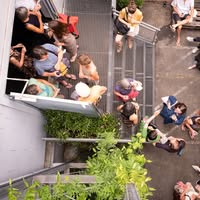
The KfW Stiftung & Frankfurt LAB residency, known as Frankfurt Moves!, invites emerging international performing arts artists trained in Africa, Asia, Latin America, or the WANA region to Frankfurt am Main for a four-week on-site residency followed by one month of remote research support. Artists receive access to professional venues at Frankfurt LAB, dramaturgical and technical assistance, a workshop presentation, stipend, housing, travel, and production expenses. The program fosters future-oriented projects, intercultural exchange, and networking in contemporary performing arts.
Künstlerhaus Mousonturm
Frankfurt am Main, Germany
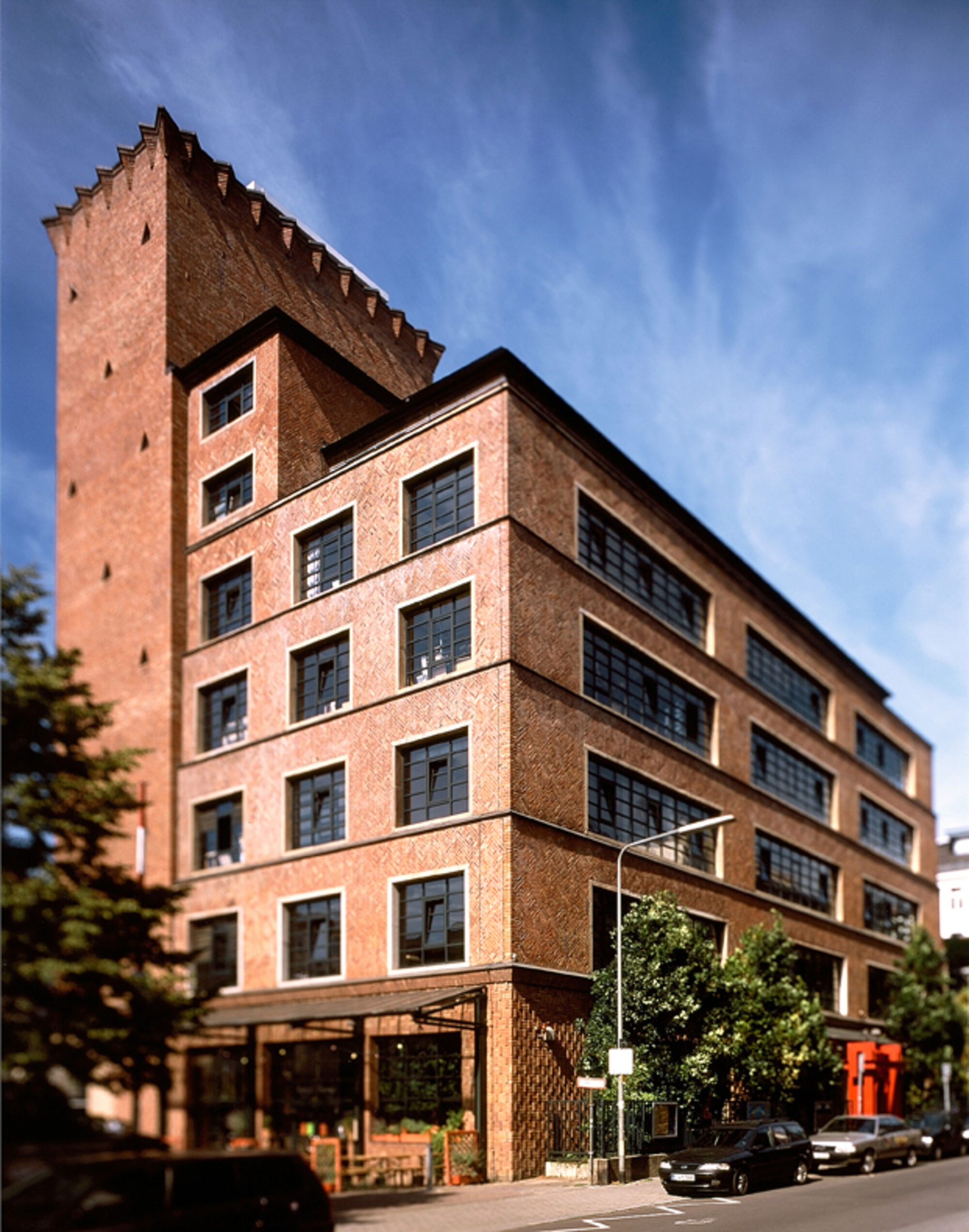
Künstlerhaus Mousonturm is a theater in Frankfurt am Main that hosts contemporary dance, performances, concerts, readings and discussions, offering residency programs for artists. The institution supports mobile productions through its 'Ensemble Mobil' initiative and provides opportunities for artists to develop work in residence.
Browse by discipline in Frankfurt am Main
Filter in Frankfurt am Main
Been to a residency in Frankfurt am Main?
Share your review